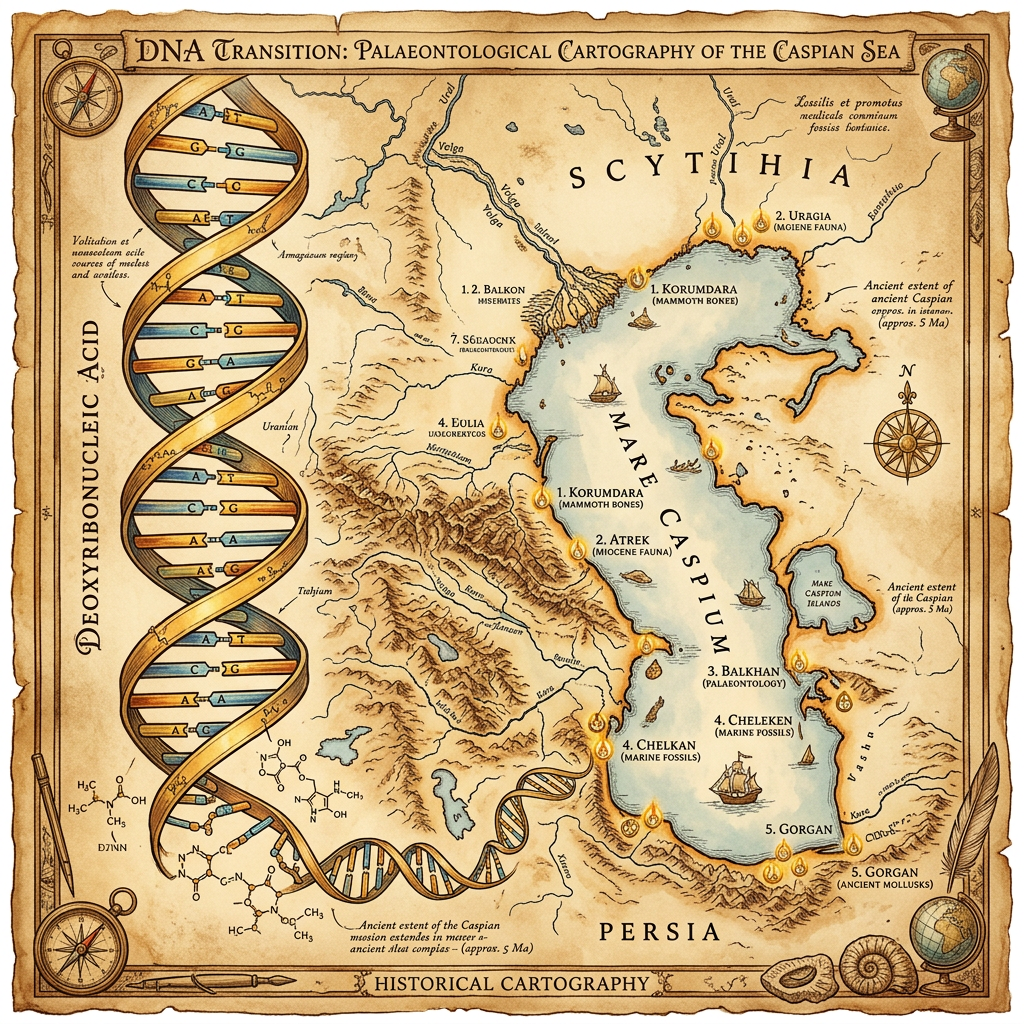
Research appearing in Science Advances has unveiled a remarkable genetic discovery from 14,000-year-old human remains excavated near the Apsheron Peninsula in the Caspian Basin. The paleogenomic study identifies a unique selection in the CYP1A1 gene, which provided these Pleistocene hunter-gatherers with an enhanced ability to metabolize polycyclic aromatic hydrocarbons (PAHs). This represents the earliest known instance of human genetic adaptation to environmental toxins produced by natural petroleum and gas seeps.
The study suggests that early populations living in high-hydrocarbon environments developed specialized biochemical defenses to mitigate the respiratory and systemic risks of living near active fire-temples and bitumen-rich landscapes. This finding provides critical insights into the deep-history of human interaction with the Caspian's unique geology and how evolutionary pressures shaped the metabolic pathways of ancient civilizations in the region long before the onset of the Bronze Age.