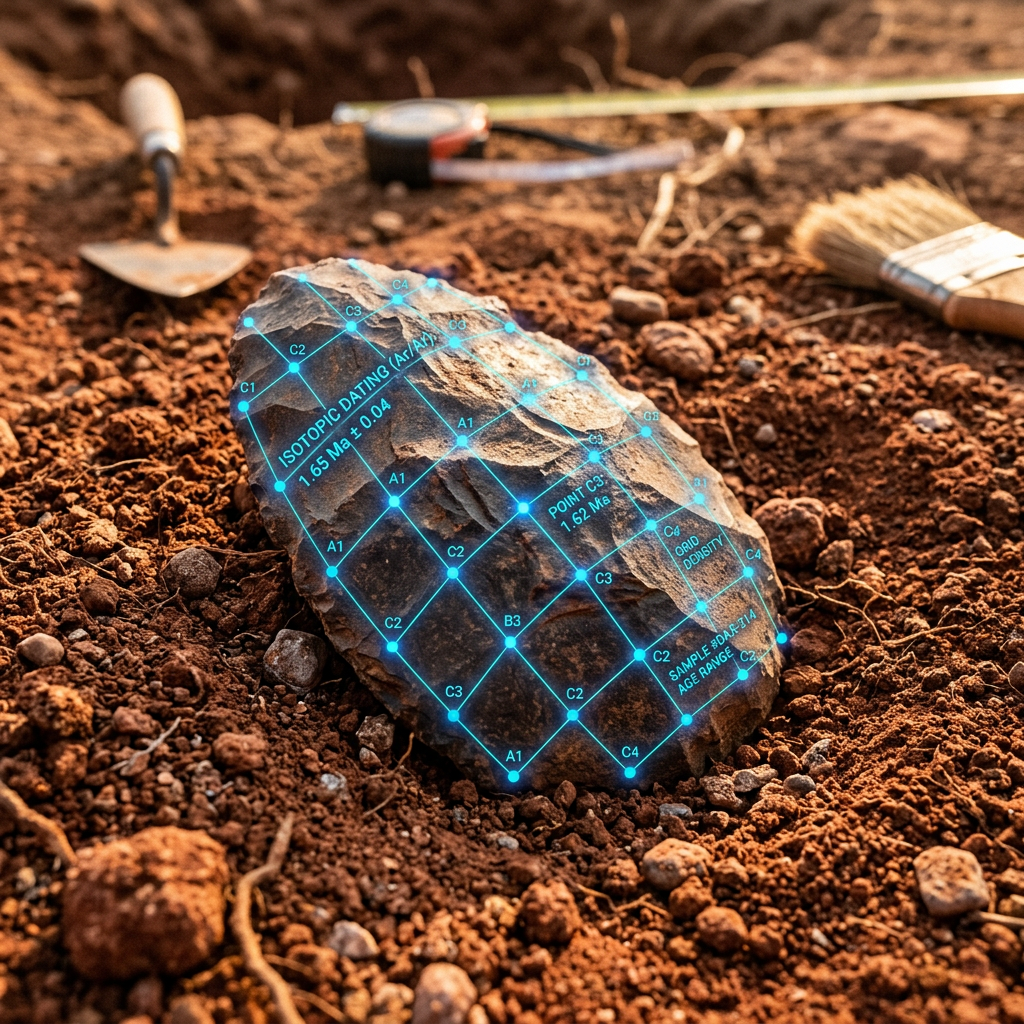
A new dating methodology using Barium-133 isotopic ratios in silicate crusts has revolutionized the timeline of human occupation in South India. A study published in Antiquity applied this technique to lithic assemblages found in the Tungabhadra Basin, refining the date of Middle Paleolithic toolkits to approximately 195,000 years ago. This methodology allows for unprecedented precision in dating artifacts found in fluvial environments where traditional carbon dating is ineffective.
The findings indicate that archaic hominins in the Indian peninsula were producing sophisticated bifacial tools and scrapers significantly earlier than the traditional 'Out of Africa' models suggested for the region. The high-resolution chronology provided by the Barium-133 analysis helps bridge the gap between the Early and Middle Paleolithic transitions, suggesting a continuous and local evolution of stone tool technology in the Deccan Plateau across nearly two hundred millennia.