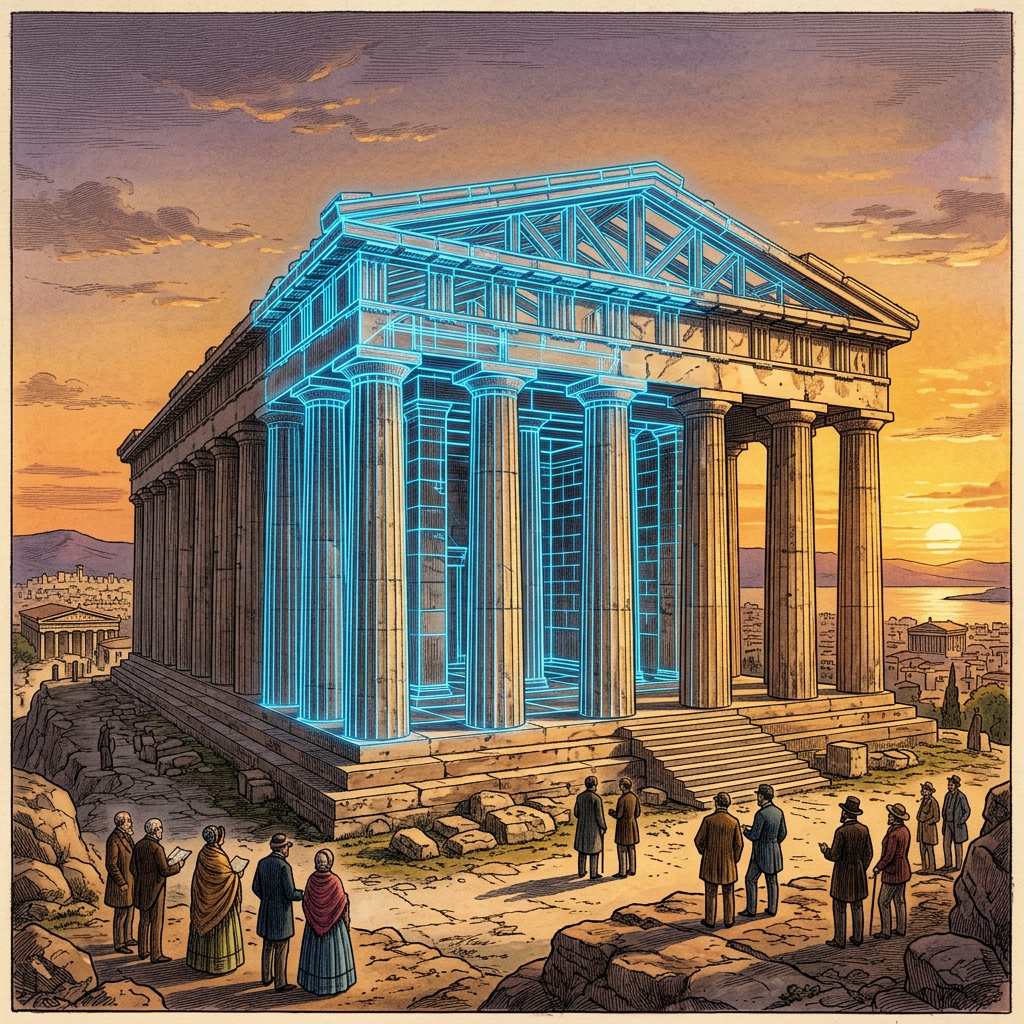
A joint task force from the National Technical University of Athens and the Getty Conservation Institute has successfully deployed a new Quantum-Holographic scanning platform to map the Temple of Hephaestus. Unlike traditional LiDAR, this technology uses sub-atomic particle sensors to peer through solid marble, revealing the exact placement of iron clamps and internal lead-poured joints used by ancient architects to reinforce the structure against seismic activity.
The scan revealed that the temple’s builders employed a sophisticated variable-tension system in the architraves, which has helped the building remain the best-preserved Doric temple in the world. This data will allow restorers to simulate how the temple will react to future earthquakes with unprecedented accuracy, ensuring that any modern interventions match the load-bearing logic of the original 5th-century BCE engineers.