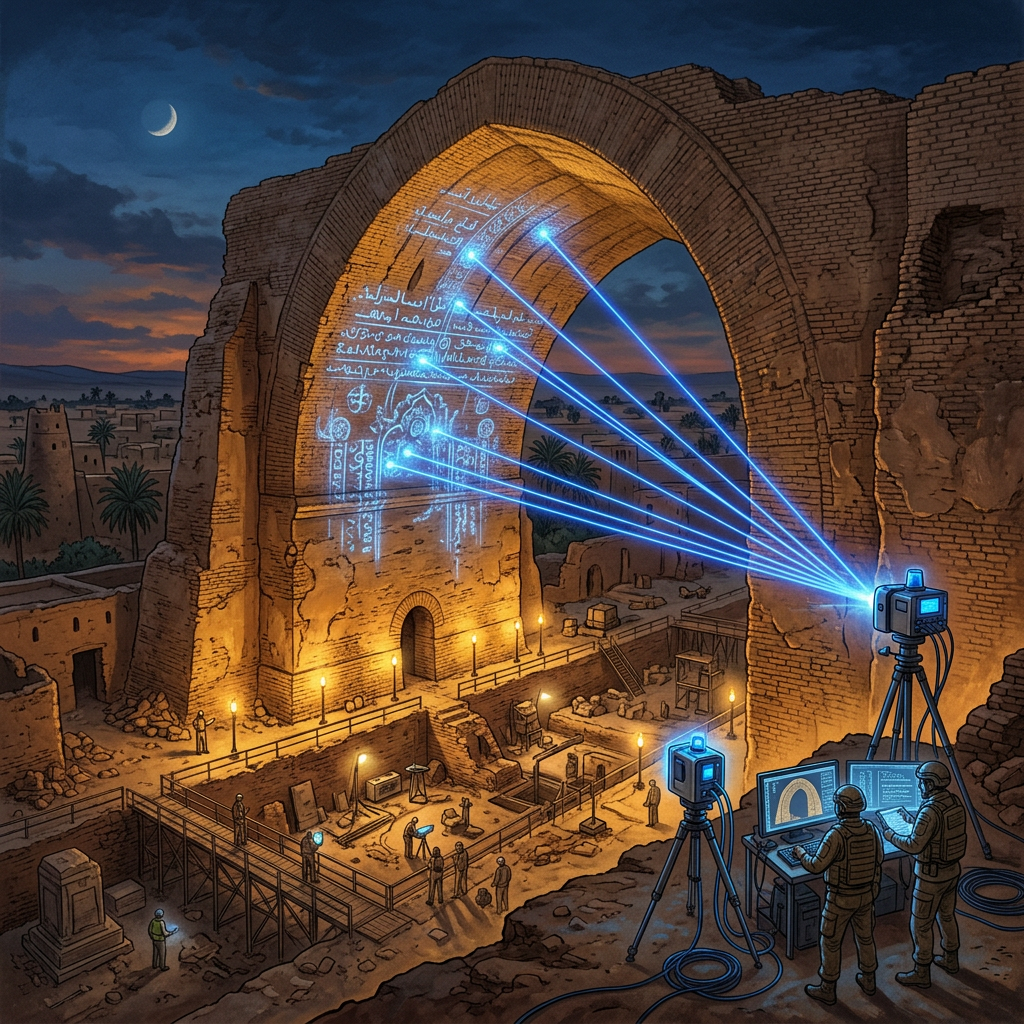
In a major technological leap for archaeology, a team of international researchers has used 'Molecular-Scanning' technology to uncover hidden Sassanid royal inscriptions beneath layers of centuries-old sediment and salt at the Taq Kasra in Iraq. The device, which detects trace chemical signatures of original pigments, revealed a series of previously unknown texts attributed to King Khosrow I. These inscriptions detail the administrative and religious reforms of the Sassanid Empire during its 6th-century zenith.
The Taq Kasra, home to the world’s largest single-span brick arch, has long been difficult to study due to its structural fragility. This non-invasive tech allows for the "digital peeling" of environmental crusts without harming the ancient brickwork. The Iraqi State Board of Antiquities and Heritage has hailed the project as a vital tool for recovering the lost history of Ctesiphon, providing new insights into the linguistic evolution of Middle Persian and the royal iconography of late antiquity.