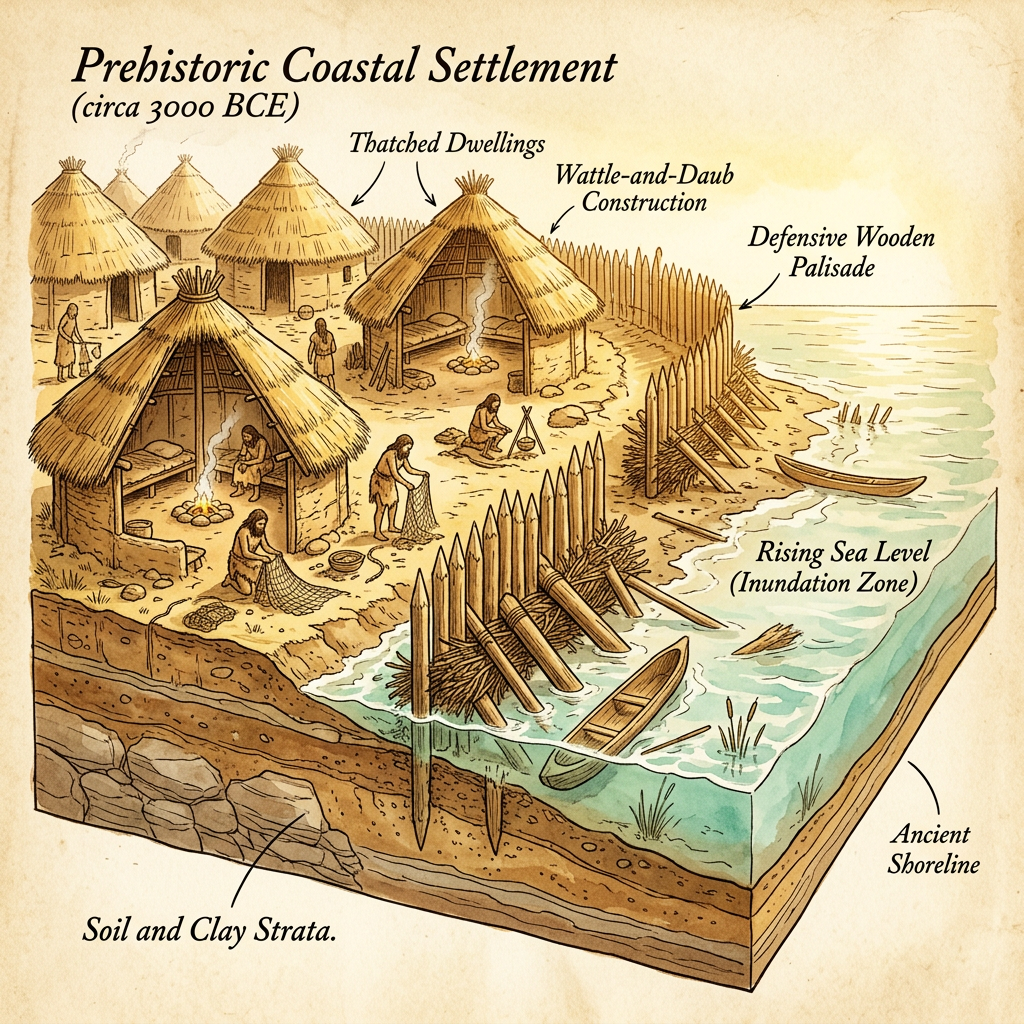
Marine archaeologists have discovered a vast network of submerged 'Post-Glacial Peatlands' off the western coast of Japan that offer a rare window into Mesolithic sea-level adaptation. Core samples taken from the seabed, which was once a dry coastal plain 8,000 years ago, revealed evidence of ancient breakwaters and terraced drainage systems designed to combat rising tides. These findings suggest that prehistoric communities were far more proactive in managing their environment during periods of rapid climate shift than previously thought.
The research, published in the journal Environmental History, uses pollen analysis and sedimentary records to reconstruct the transformation of the landscape from lush forest to salt marsh. The Sea of Japan site is particularly well-preserved due to the unique anaerobic conditions of the peat, which protected organic tools and wooden stakes from decay. This discovery provides contemporary climate scientists with a historical benchmark for how human societies have successfully—or unsuccessfully—adapted to fluctuating ocean levels over millennia.