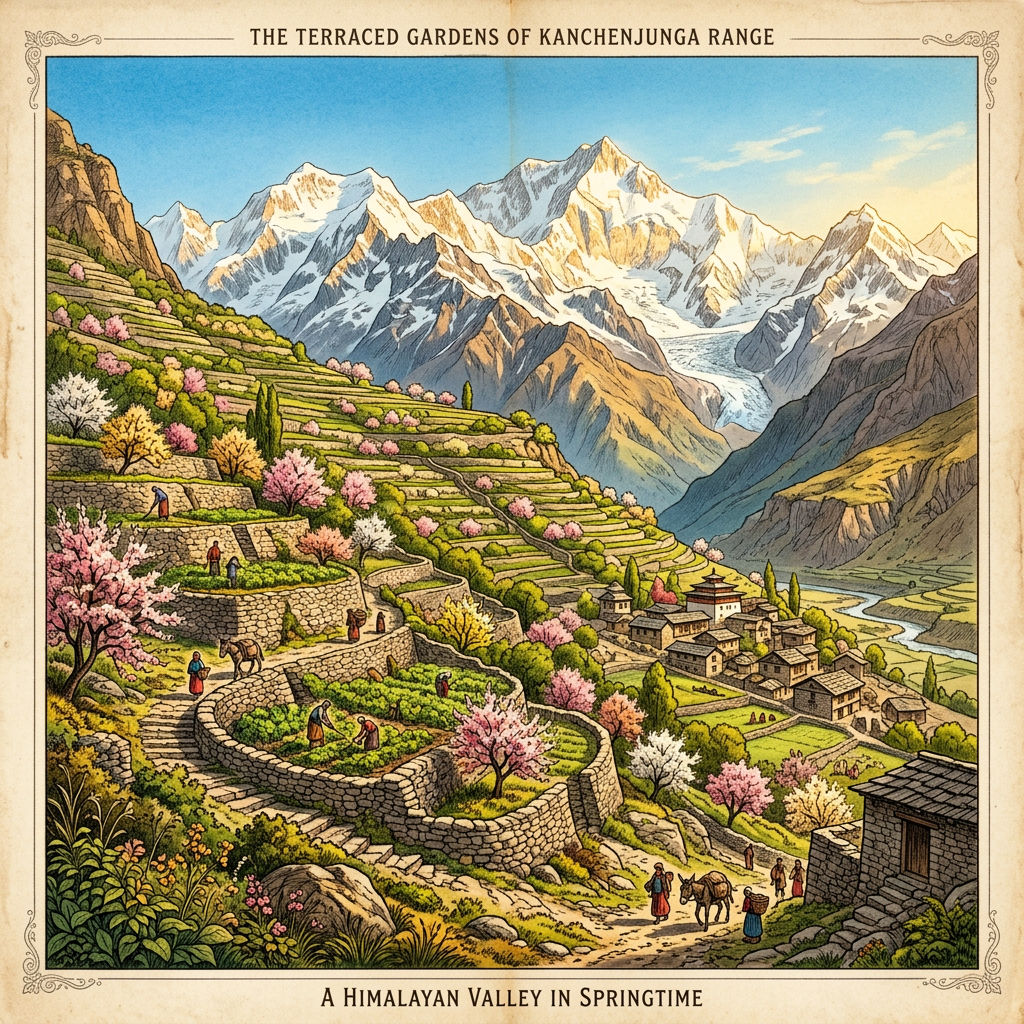
UNESCO has formally inscribed the 'Traditional High-Altitude Terraced Orchards of the Alborz Mountains' in Iran as a World Heritage site. This cultural landscape is renowned for its ingenious qanat-fed irrigation systems that have sustained pomegranate and walnut groves for over 1,500 years. The site is a testament to the resilience of mountain communities who transformed rugged, arid slopes into productive agricultural hubs through stone masonry and gravity-defying water management.
The designation highlights the 'living heritage' of the local farmers, who continue to use ancient techniques to maintain the soil and manage the limited water supply. UNESCO's committee noted that the Alborz orchards serve as a global model for sustainable high-altitude agriculture in the face of modern climate change. The inclusion of this site is expected to stimulate sustainable eco-tourism and provide international funding for the restoration of traditional stone-walled terraces that have begun to erode due to seasonal flooding.