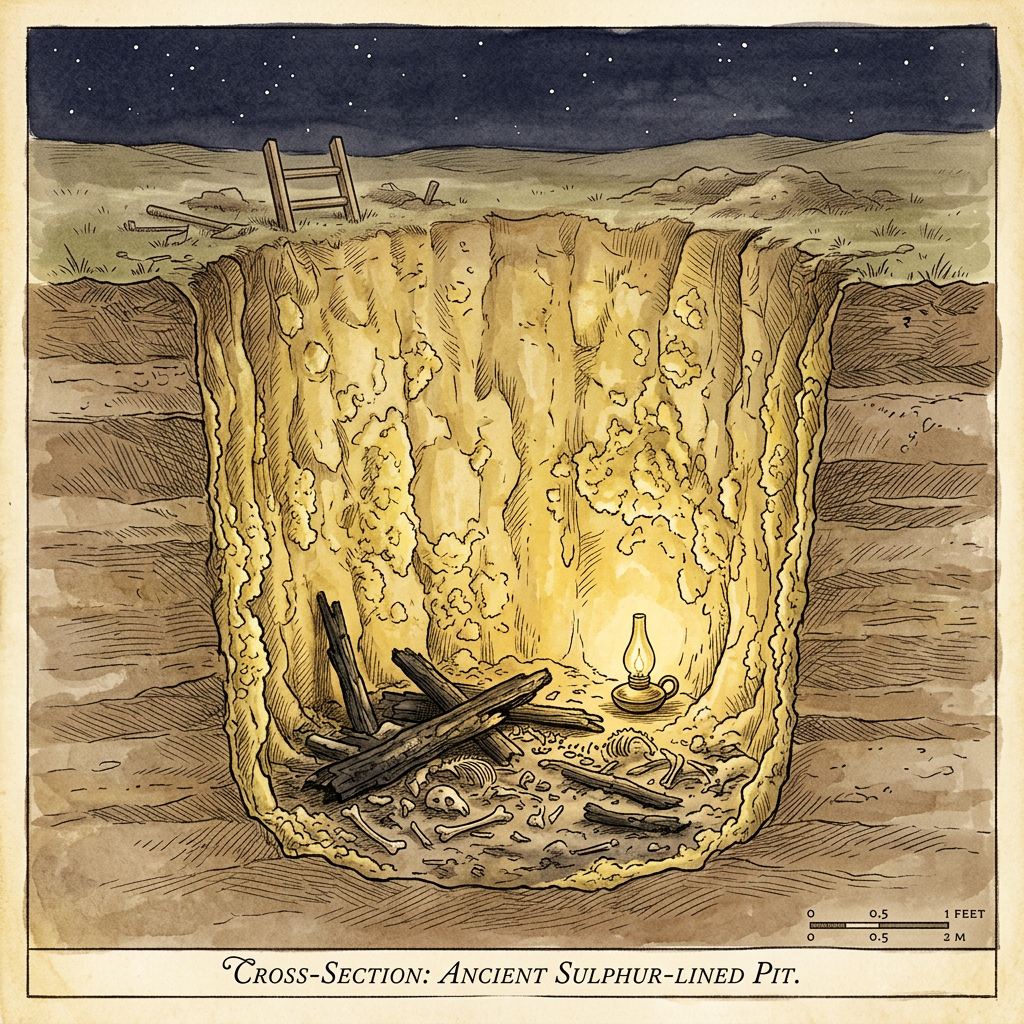
In a breakthrough for Mesopotamian studies, archaeologists working near the site of Akkad have identified a series of subterranean offering pits lined with purified sulphur. The chemical signature of the pits, which also contained charred cedar wood and the remains of mountain goats, matches ancient cuneiform descriptions of the Festival of the Volcanic Breath, a ceremony meant to appease the destructive forces of the earth.
The British Museum team notes that the use of sulphur created a distinct olfactory experience during the ritual, likely mimicking the smell of tectonic vents in the nearby mountains. This discovery suggests that ancient Akkadian festivals were highly sensory environments designed to create a bridge between the urban population and the wild, unpredictable landscapes of the northern frontiers.