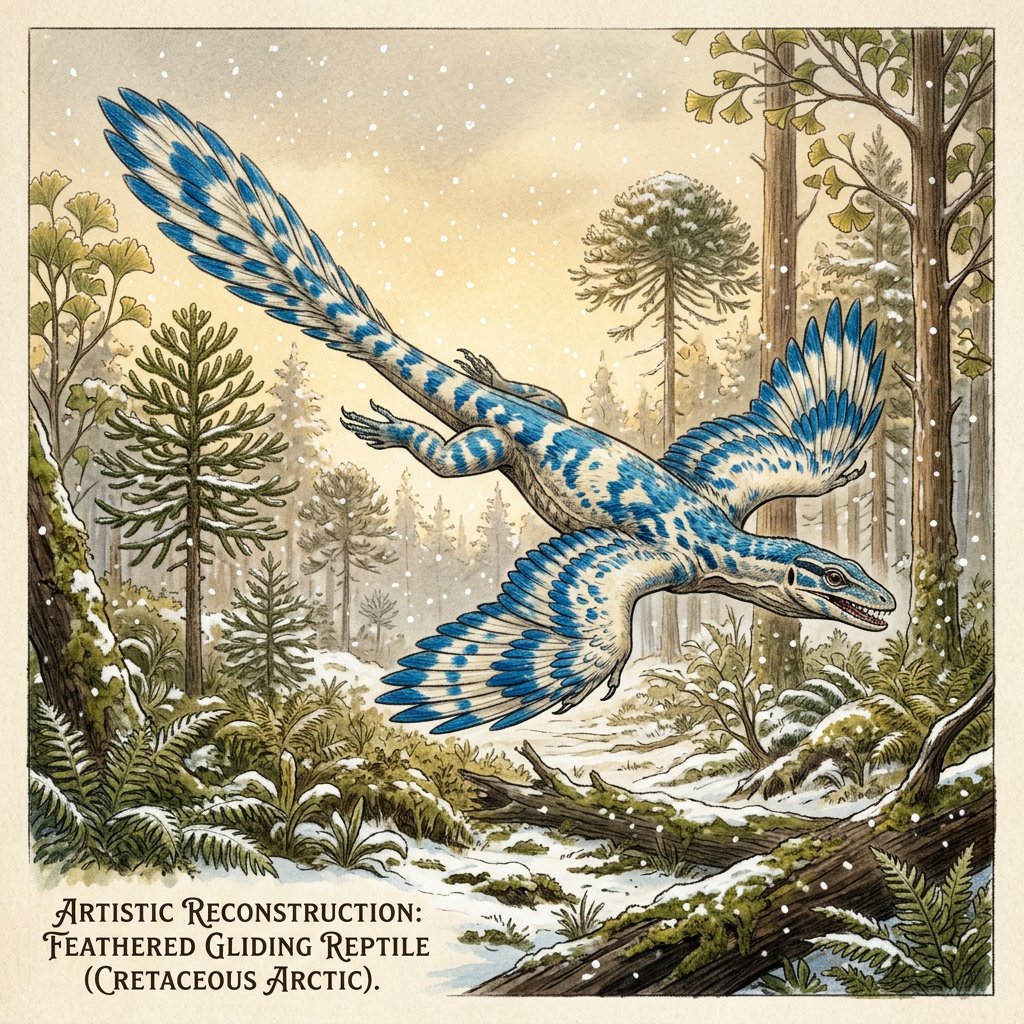
A team of paleontologists has identified a new species of prehistoric reptile, named Boreovaranus alaskaensis, based on exceptionally preserved fossils found in the Prince Creek Formation. This 'gliding polar monitor' lived during the Early Cretaceous and possessed unique elongated ribs that supported a feathered wing membrane, allowing it to glide between the high canopy of the lush forests that once covered the Arctic.
Analysis of the fossil reveals that the creature had specialized thermoregulatory scales and a thick layer of proto-feathers, adaptations necessary for survival in a region that experienced months of darkness. This discovery challenges the long-held assumption that complex gliding behaviors were restricted to warmer climates and provides a new window into the biodiversity of prehistoric polar ecosystems.