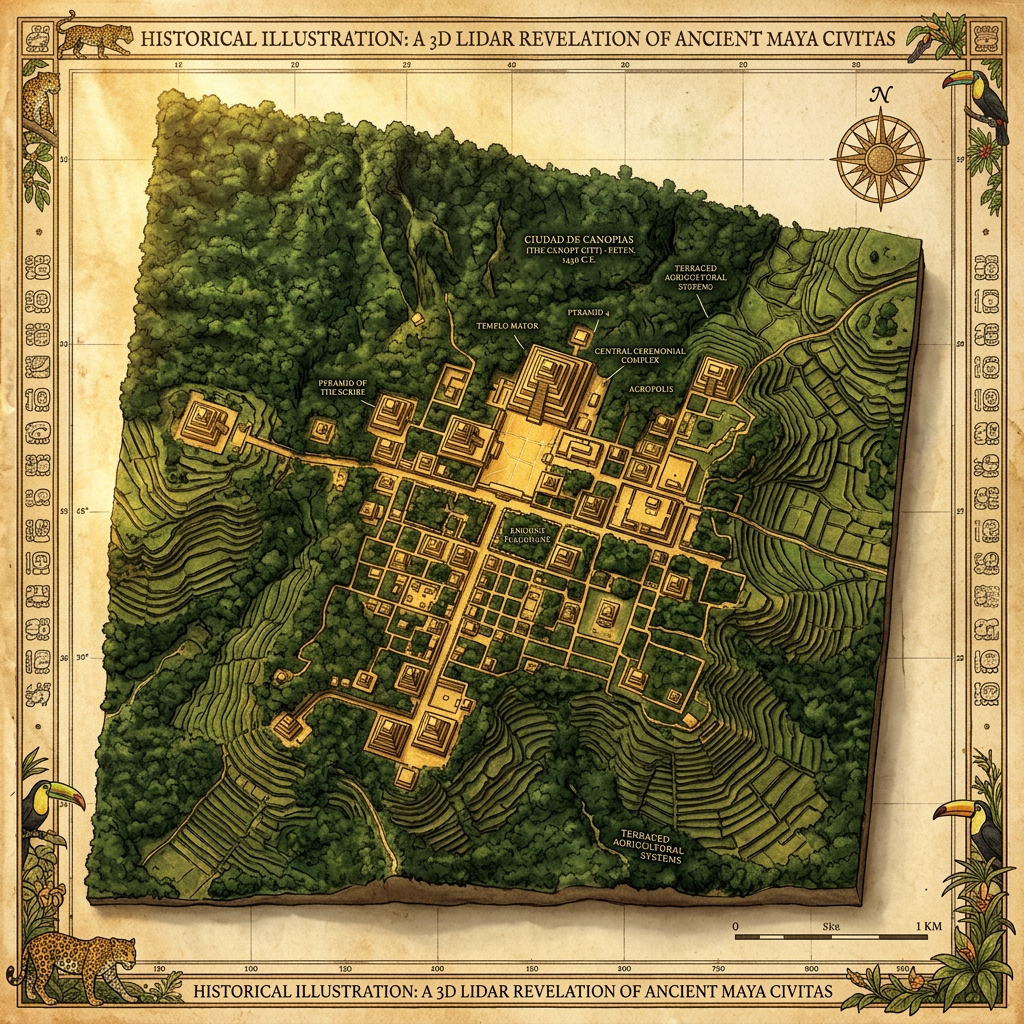
High-resolution LiDAR surveys conducted over the dense jungles of the Colombian Chocó have revealed the existence of a massive pre-Hispanic urban center previously unknown to history. Dubbed the 'Citadel of the Rain Gods' by researchers, the site covers over 200 hectares and features a central pyramid complex surrounded by hundreds of residential platforms and a sophisticated system of terraced orchards designed for high-yield fruit cultivation in a tropical environment.
Archaeologists believe the city was a major political hub for a culture related to the Calima and Quimbaya civilizations, thriving between 400 and 900 CE. The LiDAR data shows an extensive network of stone-paved roads and defensive ramparts, suggesting a highly organized society capable of managing large-scale infrastructure projects within one of the wettest environments on Earth.