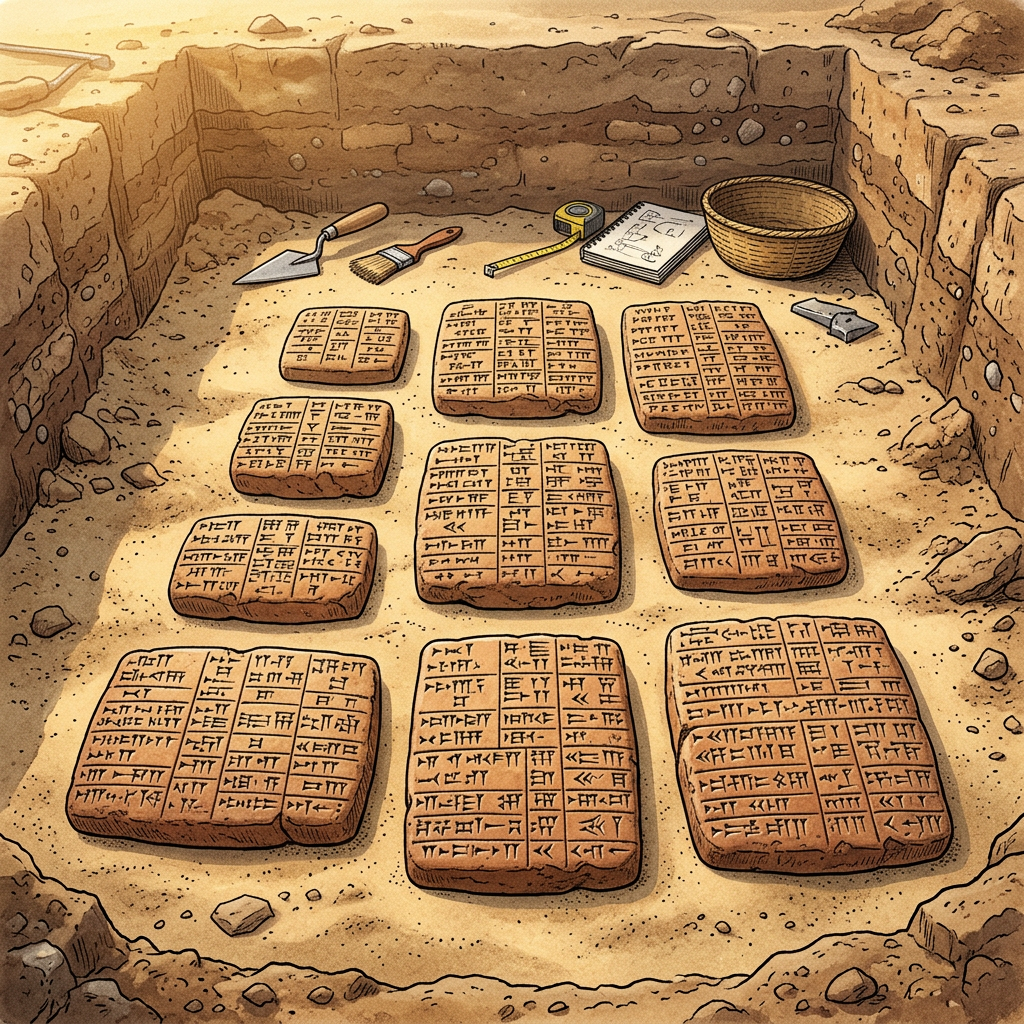
Archaeologists excavating the merchant quarter of Ancient Ur in southern Iraq have discovered a significant archive of cuneiform tablets belonging to the 'Registry of Royal Scribes for the Trans-Arabian Copper-Grade Standards.' The texts, dating to the Ur III period, provide a detailed record of metallurgical quality control for copper shipments arriving from the legendary land of Magan.
The archive includes smelting-purity ledgers that document the specific proportions of trace elements required for the production of royal bronze alloys. This find proves that the Sumerian state maintained a sophisticated bureau for checking the mineralogical integrity of imported raw materials, using standardized chemical markers to distinguish between different grades of maritime copper before they were distributed to imperial foundries.