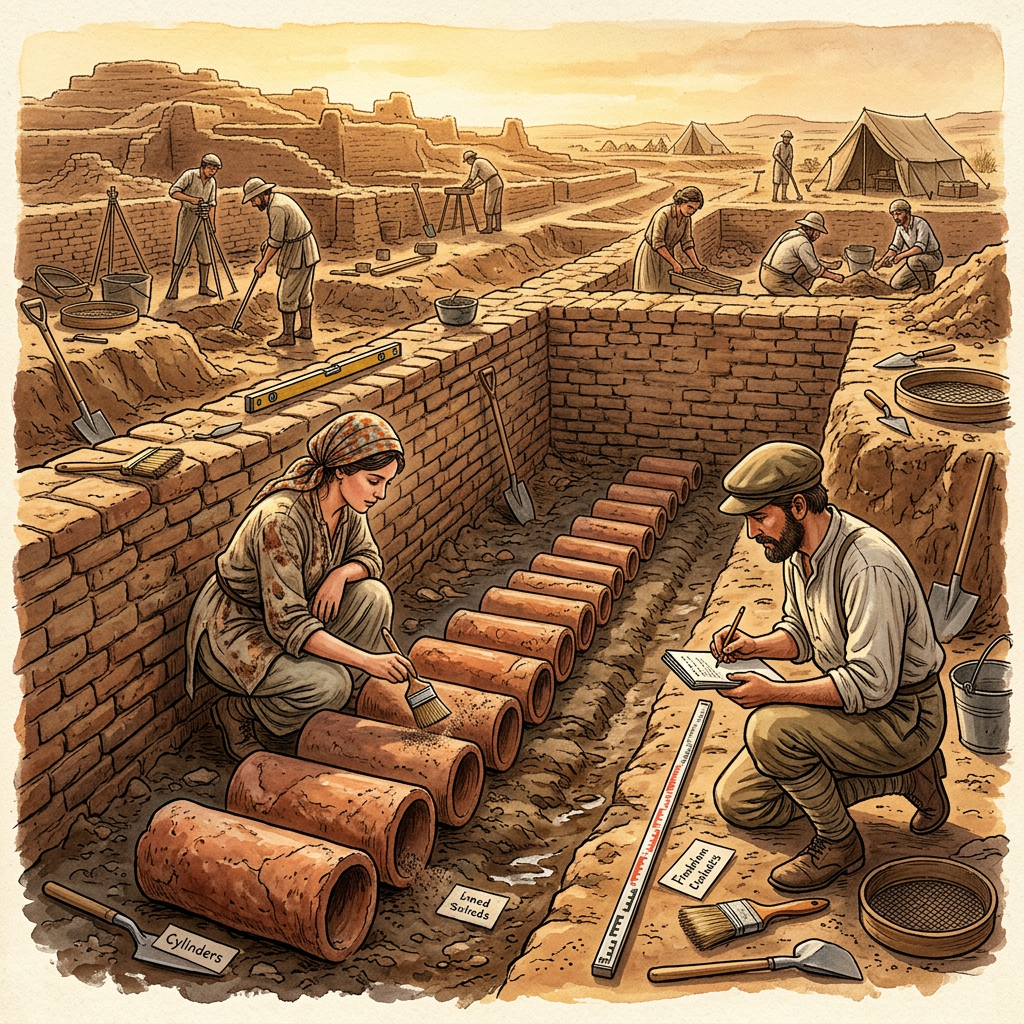
New excavations at the Mature Harappan site of Rakhigarhi in Haryana have brought to light a specialized administrative building dedicated to water management. In the central hall, researchers recovered a 'Registry of Canal-Siltage Metrology,' a series of terracotta tablets detailing seasonal sediment levels and labor requirements for the maintenance of the city's vast irrigation network.
Alongside the tablets, archaeologists discovered a cache of intact clay sediment-gauges, marked with standardized graduations previously unseen in the Indus Valley Civilization. This discovery suggests that the Harappans employed a highly centralized and scientific approach to preventing the silting of their urban waterways, ensuring the stability of their agricultural surplus during the late Third Millennium BCE.