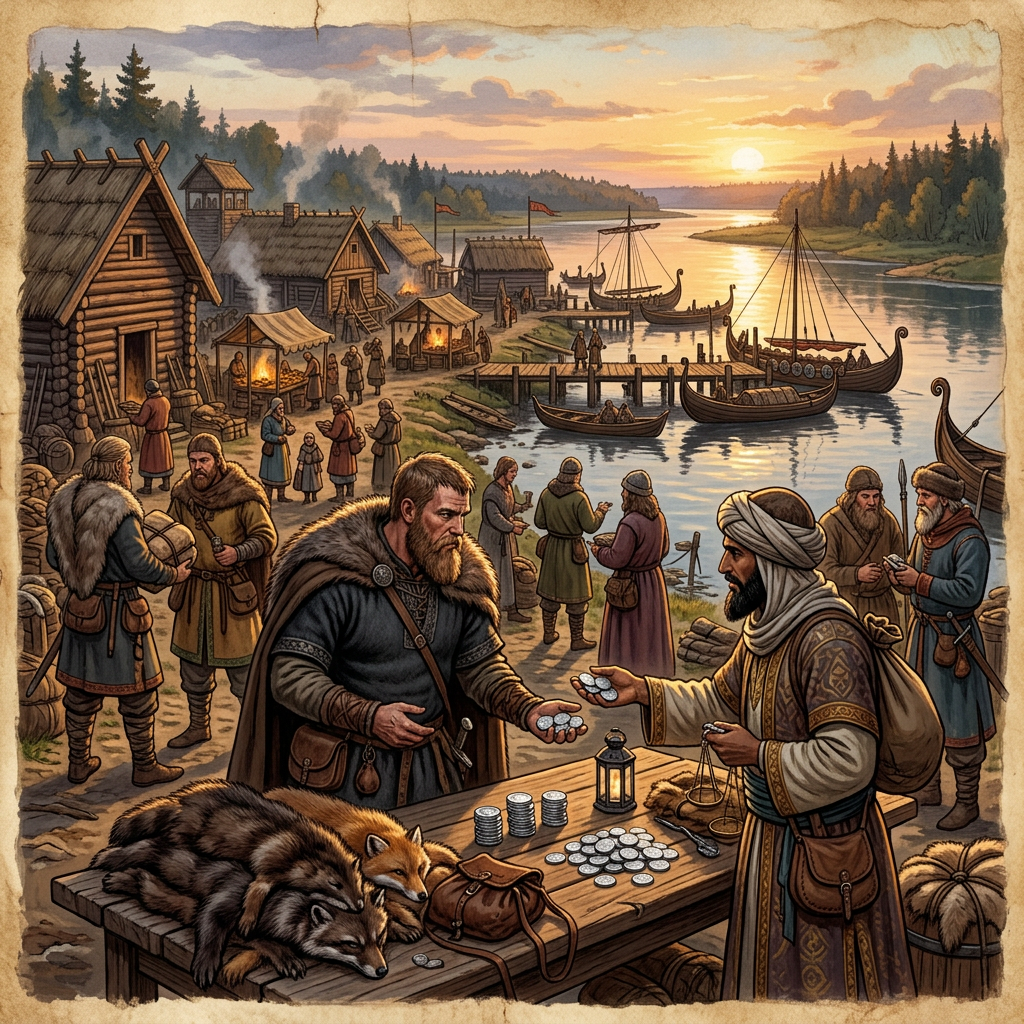
A breakthrough study published in the Journal of Archaeological Science has mapped a previously unknown 9th-century trade corridor dubbed the 'Sable and Silver' Route. By using lead isotope analysis on silver dirhams found in Viking-era hoards across Scandinavia and Russia, researchers have traced the flow of luxury furs from the Arctic north in exchange for silver from the Abbasid Caliphate. The findings indicate a highly organized logistics network that bypassed traditional Silk Road hubs.
This research highlights the economic sophistication of the Rus Khaganate and their role as pivotal intermediaries in global trade. The study also identified specific riverine waystations where specialized merchants processed high-value pelts. This discovery fundamentally alters the understanding of early medieval macro-economics, proving that the demand for luxury Arctic commodities was a primary driver for Islamic silver entering Northern Europe.