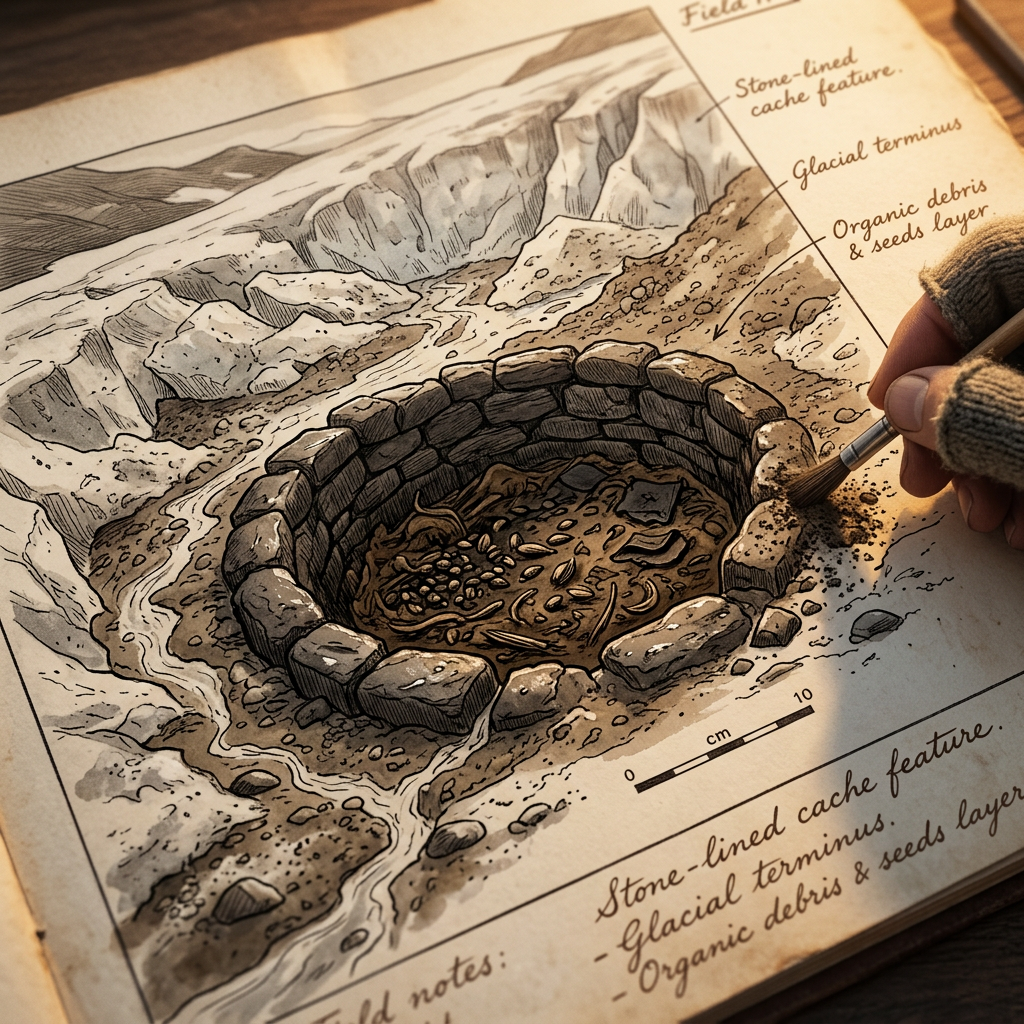
In an extraordinary example of climate archaeology, receding ice patches in the Sierra Nevada mountains have exposed perfectly preserved stone-lined pits used for seed storage by the ancestors of the Paiute people. Dating back over 5,000 years, these features contain organic residues of pine nuts and wild grasses, offering an unprecedented look at prehistoric alpine subsistence strategies. The constant cold of the ice patches acted as a natural freezer, preserving botanical remains that would otherwise have decayed.
Archaeologists working alongside tribal elders have documented the sites before they can be damaged by exposure to the elements. The discovery suggests that ancient indigenous groups utilized high-altitude zones much more intensively and systematically than previously believed. These storage systems represent a sophisticated form of environmental engineering designed to mitigate the risks of seasonal food shortages in the arid Great Basin region.