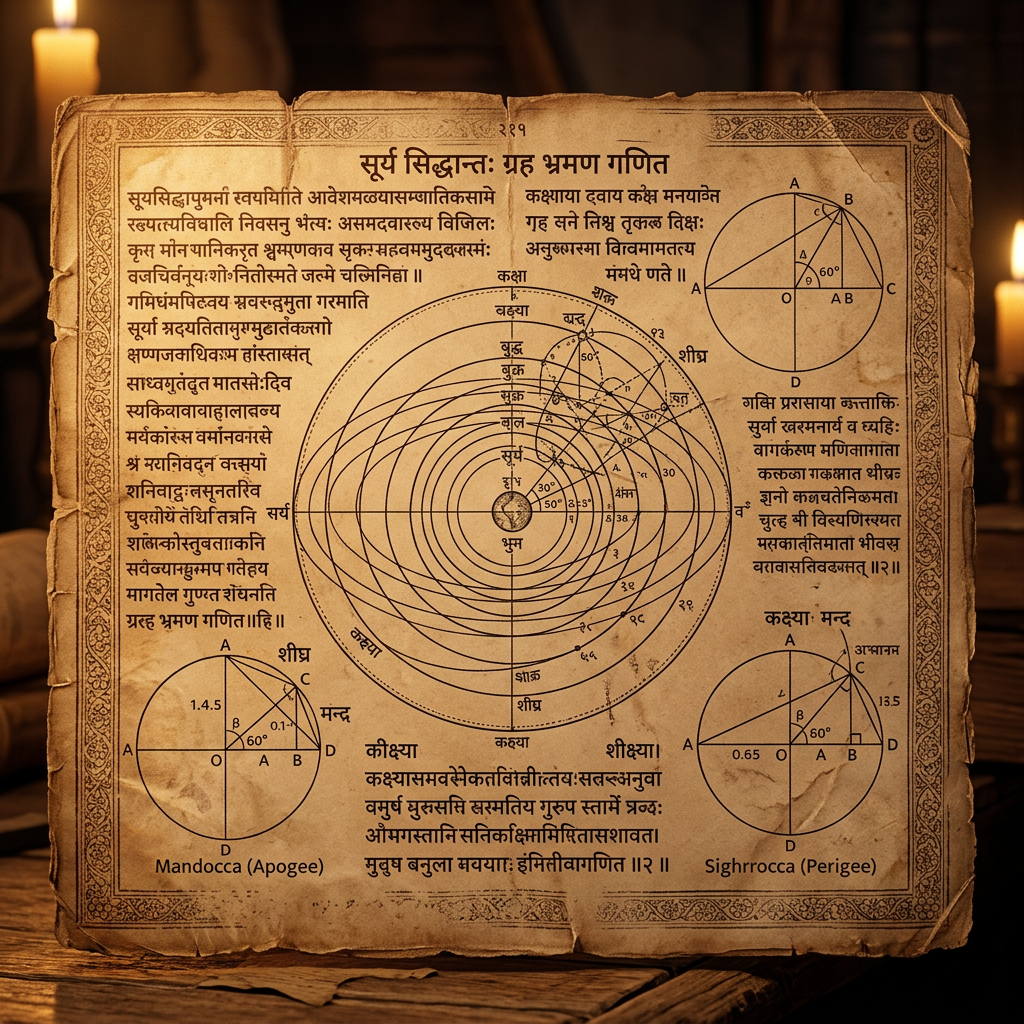
A collaborative research project between the Indian Institute of Science and Oxford University has unveiled sophisticated mathematical models hidden within the 12th-century Sanskrit treatise Siddhanta-Ratnavali. Using advanced computational linguistics, scholars identified recursive algorithms designed to calculate non-linear perturbations in lunar longitude with a precision that rivals early modern European astronomy.
The study highlights how medieval Indian mathematicians utilized iterative approximation methods to account for the gravitational influence of the sun on the Earth-Moon system. These findings suggest that the Kerala School of Mathematics and its predecessors had developed specialized computational techniques for celestial mechanics far more advanced than previously recognized by contemporary historiography.