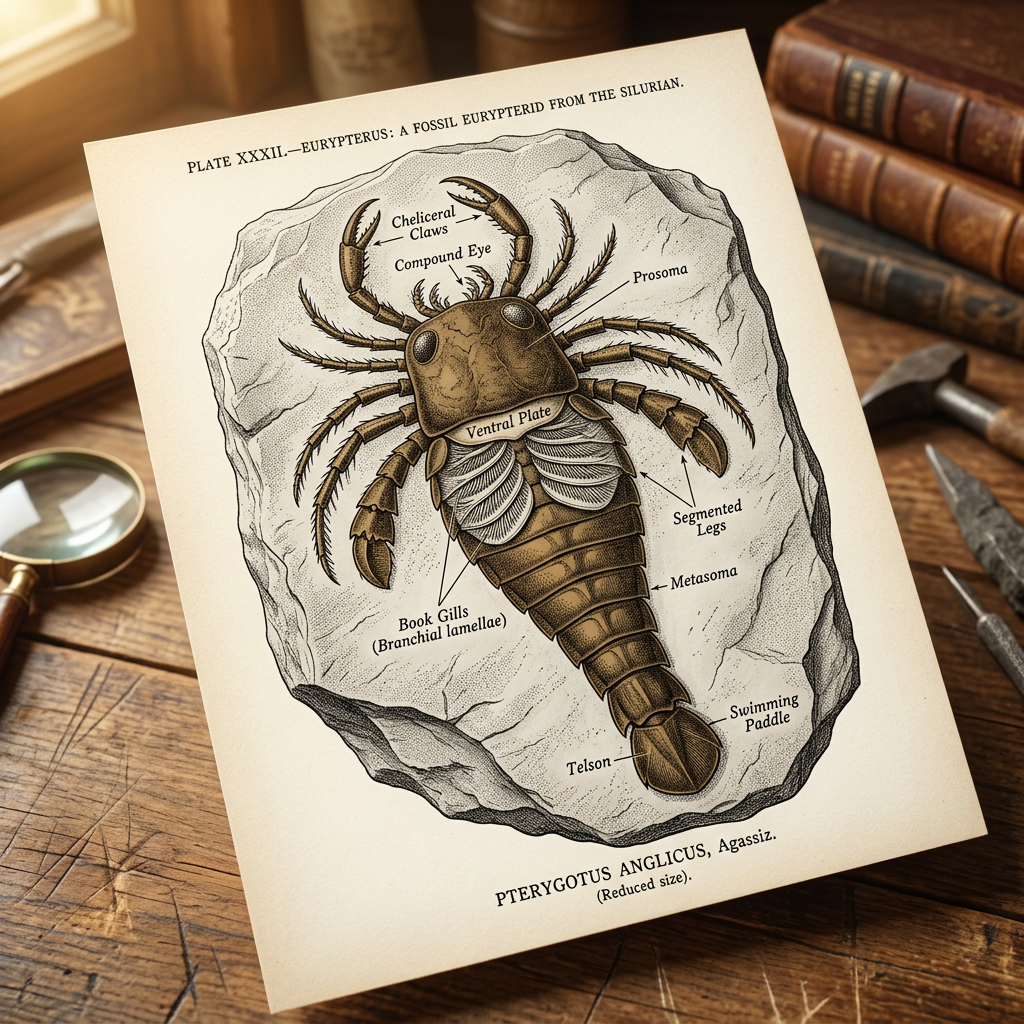
Paleontologists working in a previously unexplored extension of the Burgess Shale in the Canadian Rockies have unearthed the remarkably preserved remains of a Pterygotid eurypterid, or sea scorpion, dating back over 425 million years. The specimen, measuring nearly 2.5 meters in length, represents one of the largest arthropods ever to inhabit the ancient oceans.
The discovery is particularly significant due to the preservation of the creature’s respiratory systems. Using high-resolution synchrotron scanning, researchers identified delicate "book gills" that were mineralized in such detail that the individual lamellae are still visible, providing the first definitive evidence of how these massive predators managed oxygen exchange in low-visibility Paleozoic waters.