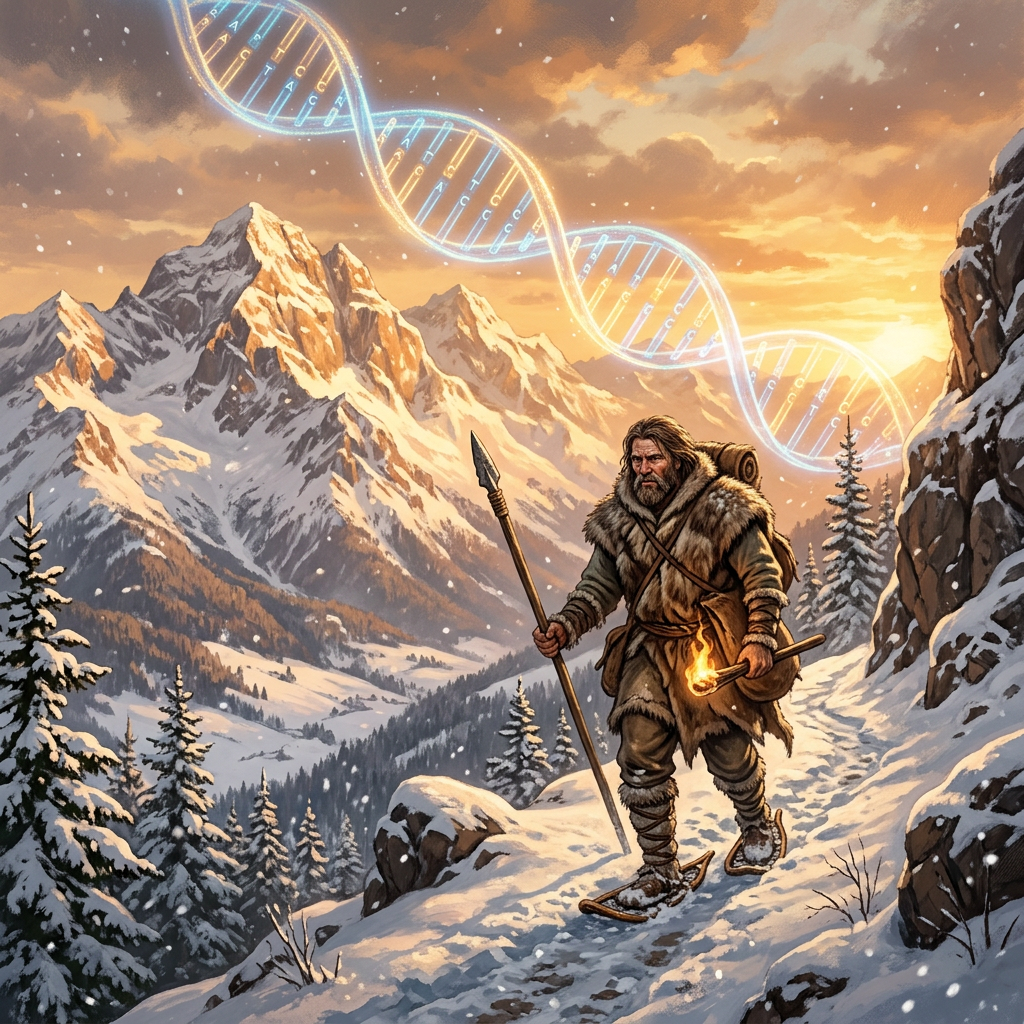
A groundbreaking study published in Nature Communications has revealed that ancient populations inhabiting the Balkan Mountains 12,000 years ago possessed a unique genetic toolkit for surviving extreme cold. By sequencing the genomes of remains found in high-altitude limestone caves, researchers identified a distinct selection for the TRPM8 and UCP1 genes, which regulate metabolic heat production and vascular response to freezing temperatures.
This discovery marks the earliest known instance of specialized genetic adaptation to sub-zero high-altitude environments, occurring significantly earlier than previously documented adaptations in the Andes or the Himalayas. The findings suggest that post-glacial human dispersal into the rugged terrains of Southeastern Europe was driven by rapid evolutionary shifts that allowed foragers to exploit previously uninhabitable alpine niches.