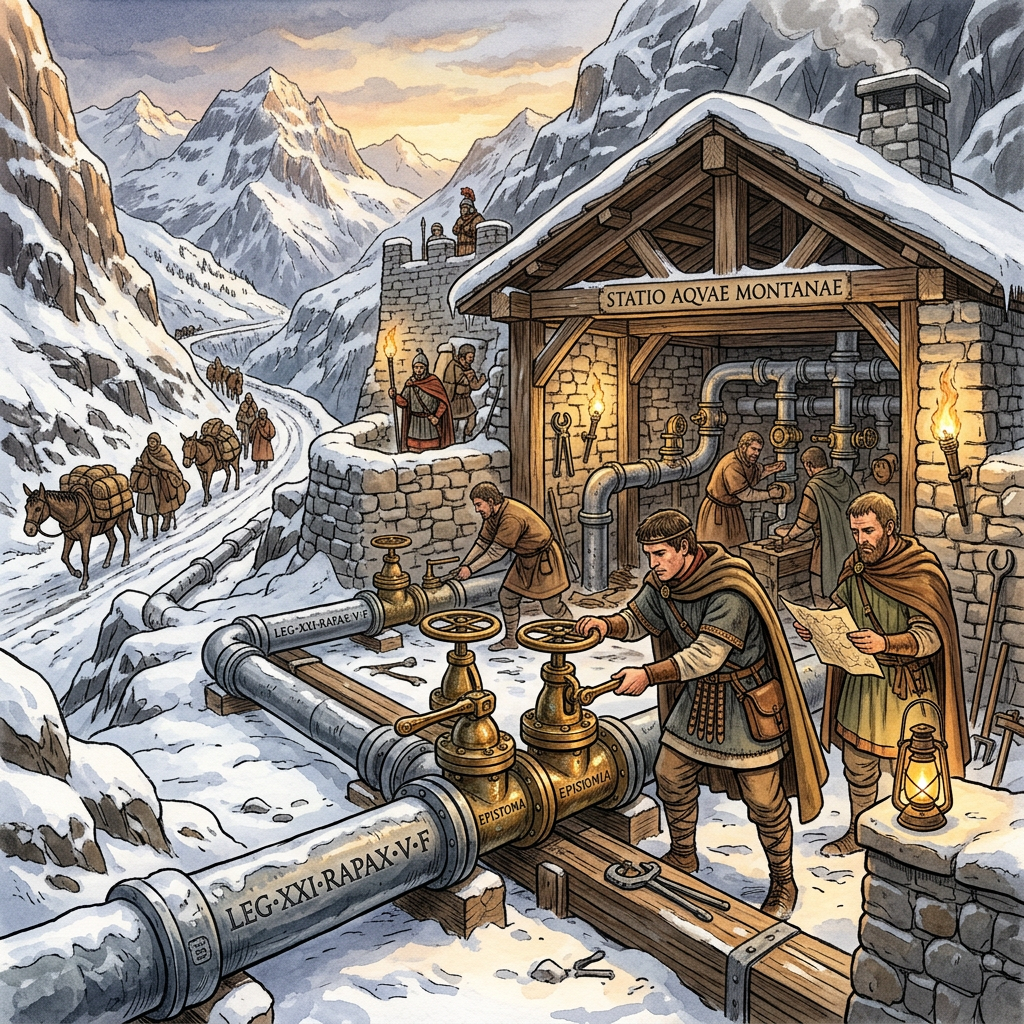
Archaeologists working in the Austrian Alps have identified a unique Roman administrative outpost dedicated to the "Imperial Bureau of High-Altitude Aqueduct-Aeration." The site yielded a cache of lead templates and bronze valve components designed to regulate air pressure within mountain water-delivery systems to prevent pipe bursts during sudden temperature shifts.
This discovery confirms that Roman hydraulic engineers employed aeration chambers to stabilize the flow of water across steep alpine gradients. The presence of standardized maintenance logs on lead tablets further underscores the Roman Empire's rigorous approach to infrastructure resilience in its most challenging frontier territories.