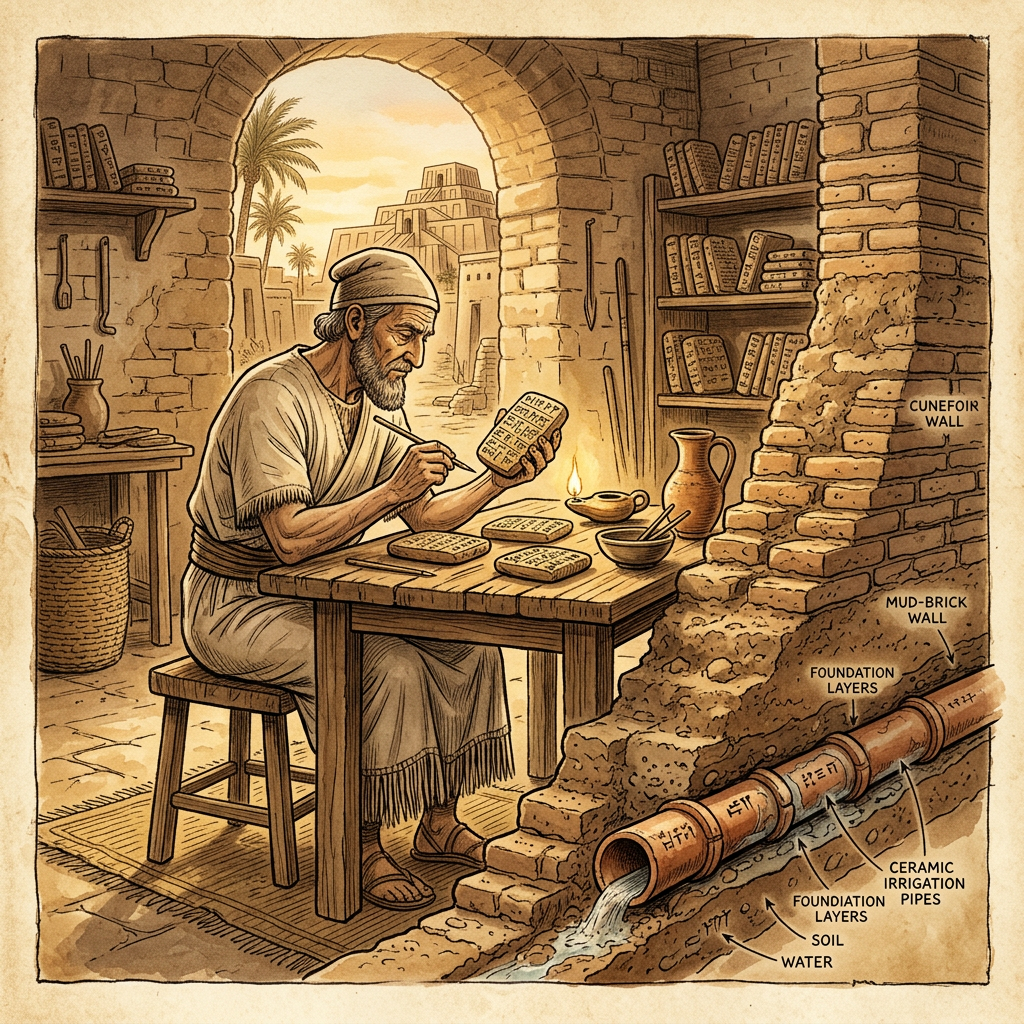
New excavations at the ancient city of Nippur in southern Iraq have revealed a specialized "Academy of Advanced Soil-Thermodynamics" dating to the Old Babylonian period. Researchers identified a library of cuneiform tablets that detail mathematical models for predicting soil heat retention and its impact on subterranean irrigation drainage systems.
The archive suggests that Babylonian engineers utilized thermal-conduction principles to design moisture-stable foundations for ziggurats and public granaries. These tablets represent the earliest known records of civil engineering physics, demonstrating a level of environmental mastery previously thought to have emerged centuries later in the Mediterranean.