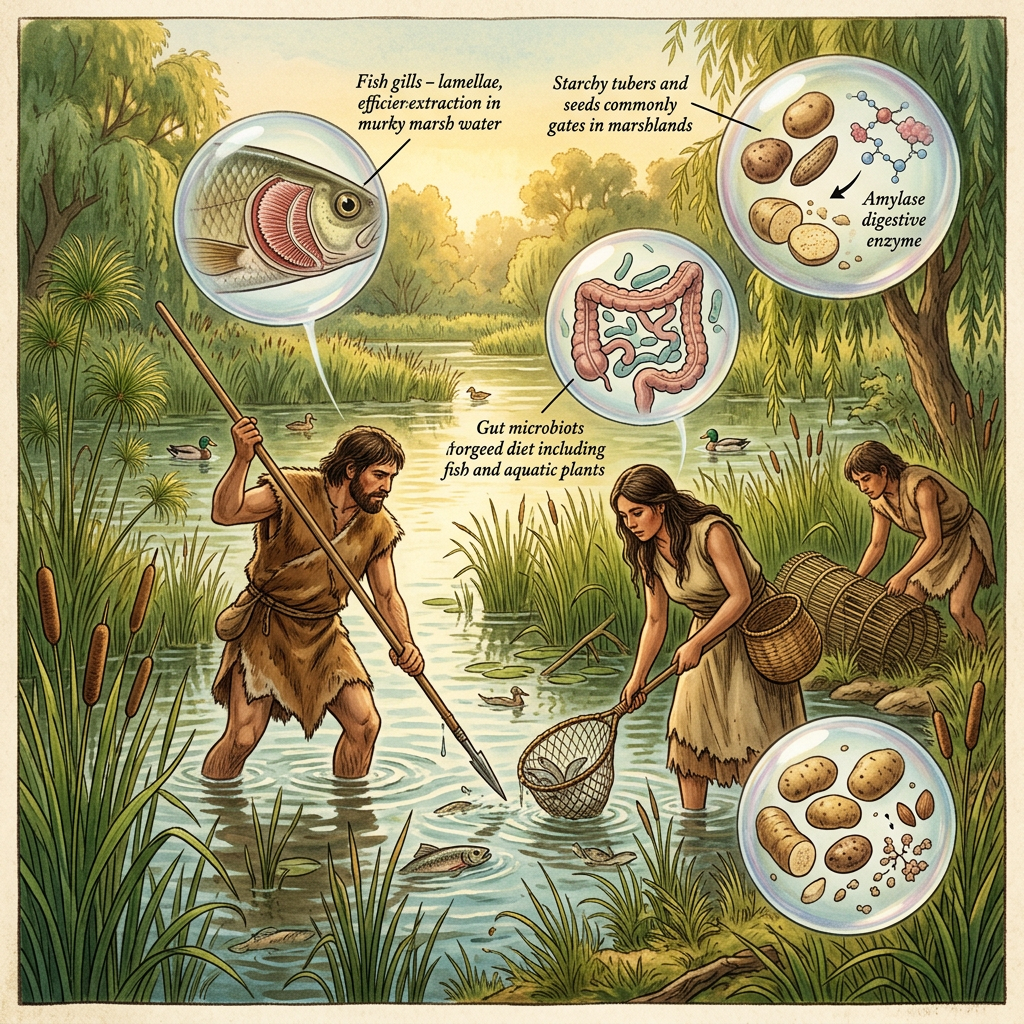
A large-scale genomic analysis led by the Copenhagen GeoGenetics Centre has identified a lost pulse of early Holocene migration in the Okavango Delta. Sequencing the DNA of 11,000-year-old remains, the team discovered a unique genetic adaptation to high-nitrate riverine ecosystems. The individuals carried specific alleles that enhanced the body's ability to neutralize nitrates and nitrogenous toxins found in localized aquatic flora.
This research highlights the extreme plastic nature of the human genome in response to fluvial stressors. The study suggests that as the African climate shifted during the early Holocene, isolated communities developed specialized physiological traits that allowed them to colonize high-nutrient but chemically challenging wetland environments, forming a distinct 'ghost lineage' of aquatic foragers.