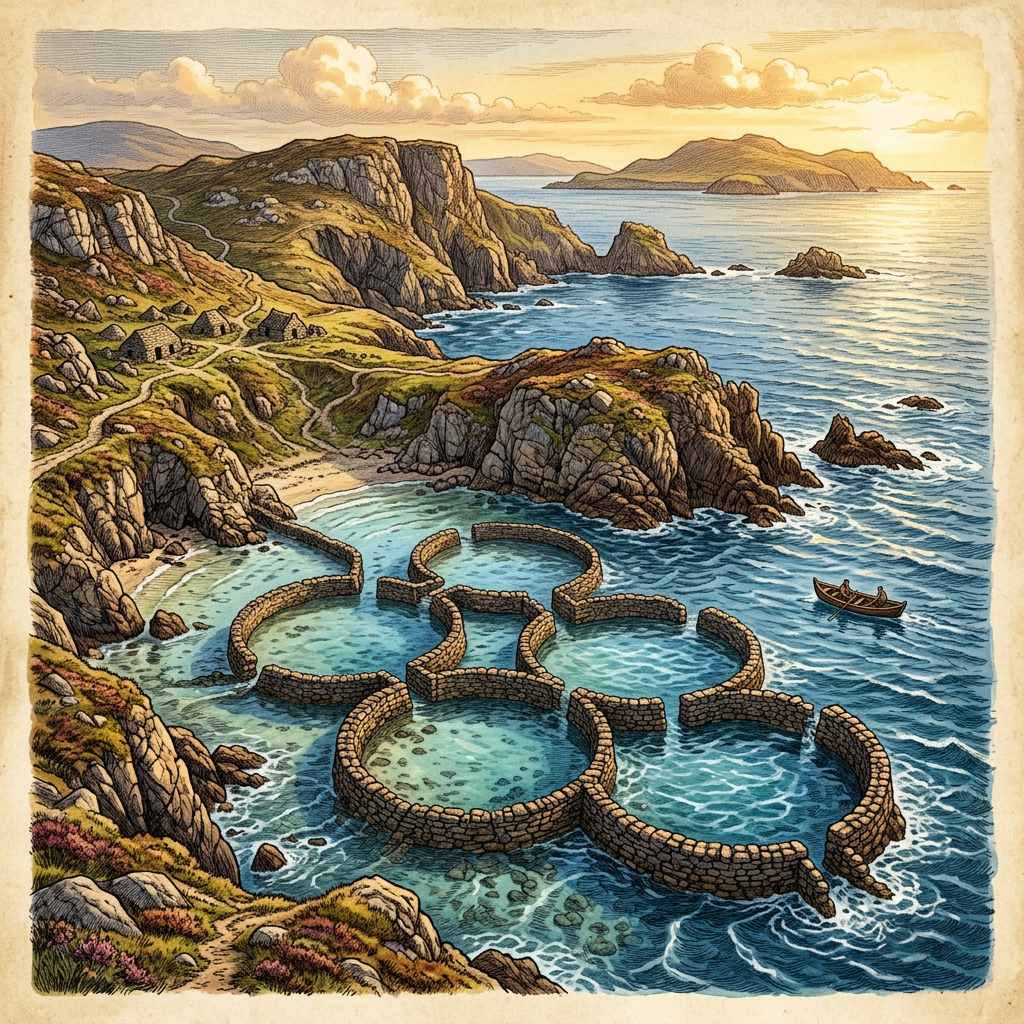
High-resolution LiDAR mapping in Australia's remote Kimberley Plateau has identified a sprawling network of "Stone-Tidal Reservoirs" dating back 12,000 years. These man-made structures, carved directly into the coastal bedrock, were designed to trap fish and crustaceans during tidal retreats, providing a stable food source for early Aboriginal communities.
The survey reveals that the reservoir system was part of a larger hydraulic landscape that included artificial channels and seasonal storage pools. This discovery provides the first physical evidence of permanent aquaculture infrastructure in prehistoric Australia, fundamentally changing the understanding of early hunter-gatherer sophistication and environmental management in the Sahul region.