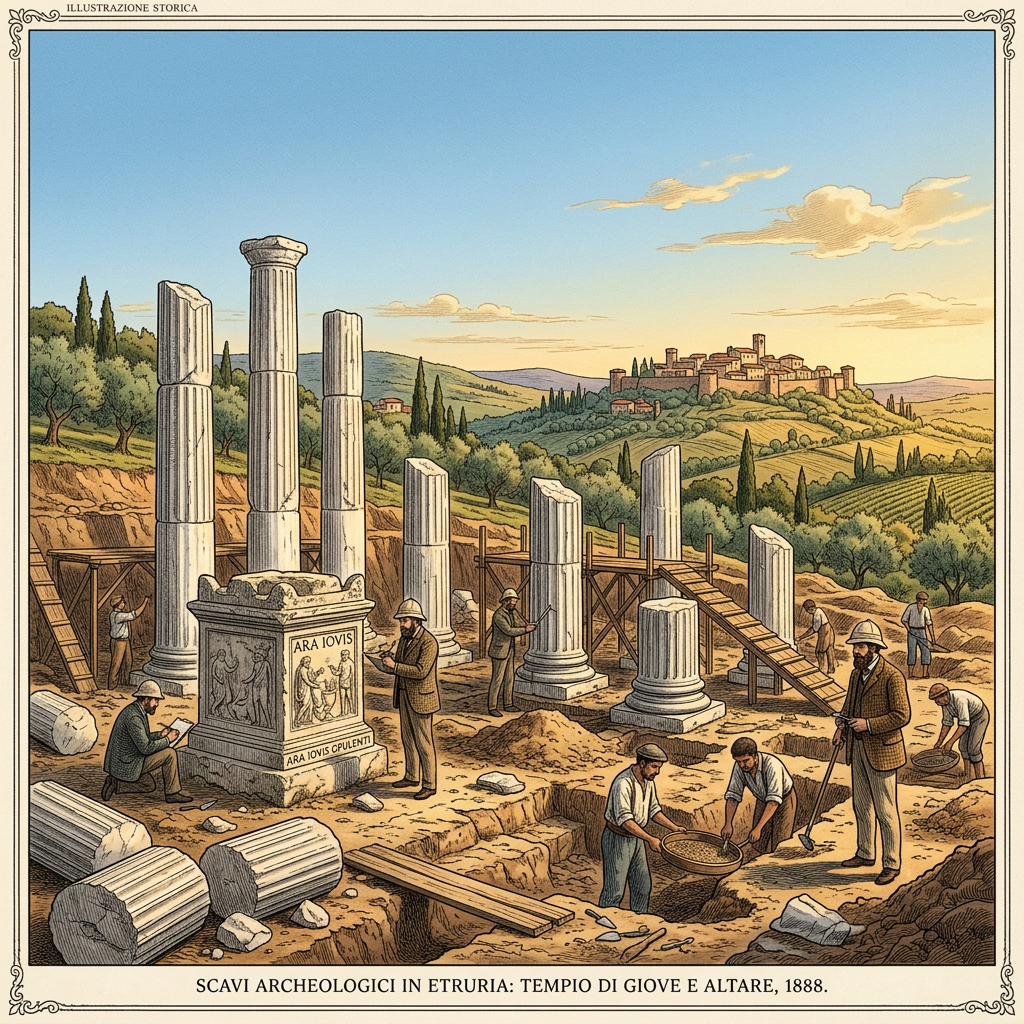
During a routine land survey near the ancient town of Roselle in Tuscany, archaeologists stumbled upon the foundations of a remarkably intact Roman temple. Dedicated to Quirinus, one of the earliest deities of the Roman state, the building dates to the 2nd century CE. Unlike many temples that were repurposed or looted, this site appears to have been sealed by a landslide in late antiquity, preserving its Carrara marble friezes and a collection of bronze votive spears in situ.
The friezes depict scenes of civic peace and agricultural bounty, reflecting the god's role as a protector of the Roman people in their peaceful pursuits. The excavation team also found a sacrificial altar with faint traces of wine and grain offerings, providing a rare 'snapshot' of Roman ritual practice. This discovery is being hailed as one of the most significant finds in Etrurian archaeology in the last several decades due to the rarity of temples dedicated specifically to Quirinus outside of Rome itself.