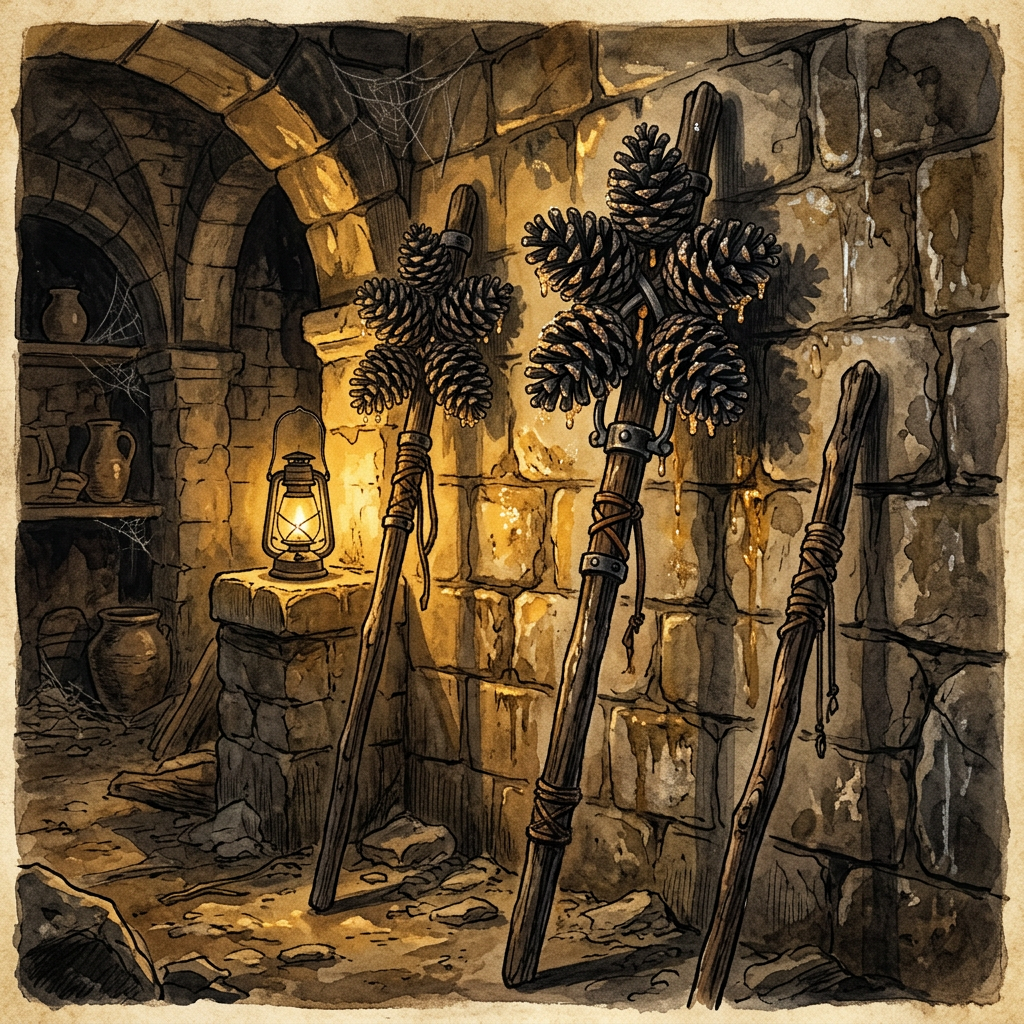
Archaeologists working in the ancient Phrygian capital of Gordion have discovered a cluster of Myrrh-Lacquered pinecone thyrsi (ritual staffs) dating back to the 15th century BCE. These artifacts were found within a subterranean chamber used for "Forest-Spirit" spring parades, where participants honored the awakening of the woodlands. The presence of imported myrrh suggests a sophisticated trade network dedicated to enhancing the sensory and aromatic experience of these early Anatolian festivals.
The pinecones, still bearing traces of the exotic aromatic lacquer, were mounted on polished cedar poles and carried through the streets in processional dances. This find highlights the continuity of Anatolian vegetation rites, showing that the later Greco-Roman celebrations of Dionysus likely drew upon much older, locally developed Phrygian heritage and botanical ritualism designed to mirror the seasonal cycles of the Mediterranean forest.