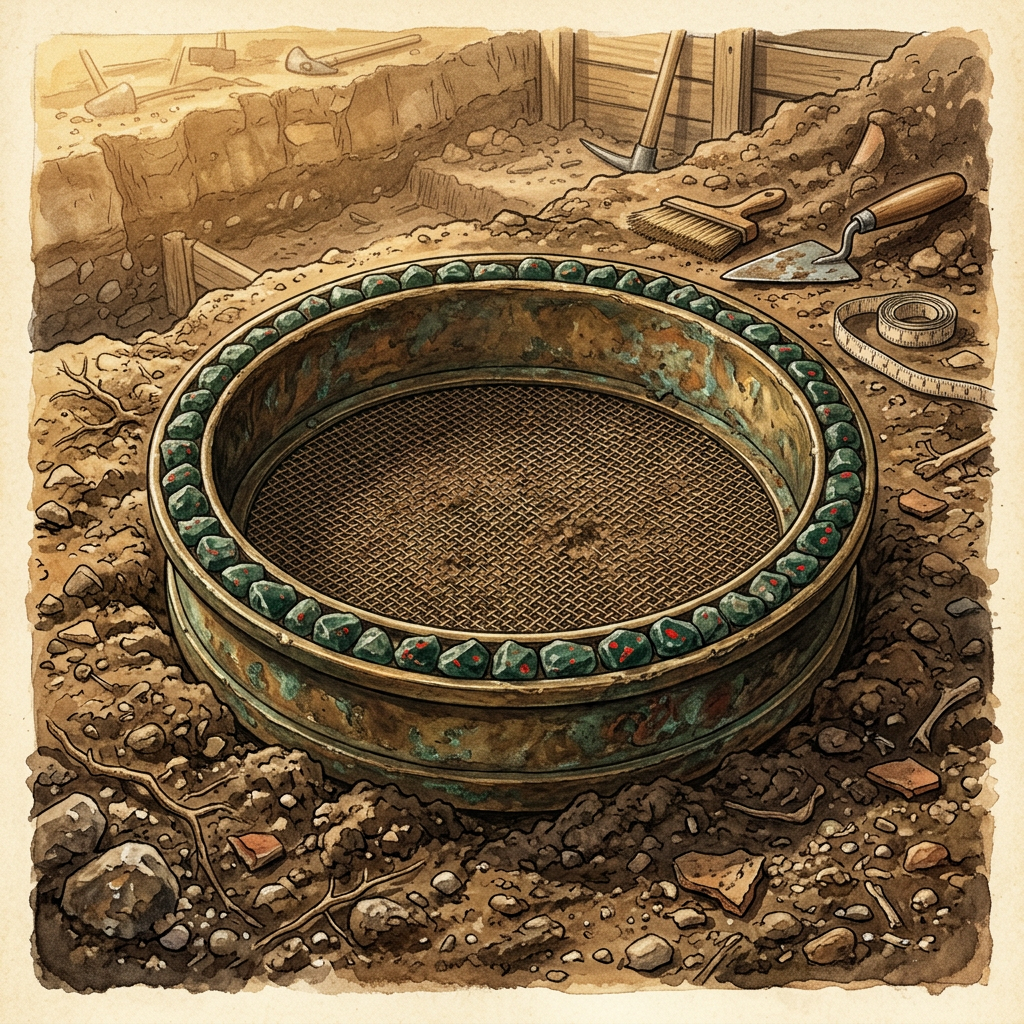
In the ruins of the ancient Lydian capital of Sardis, archaeologists have unearthed a cache of Bloodstone-Inlaid ritual grain-sieves. These bronze tools, decorated with polished heliotrope (bloodstone), were used during "Mother-Earth" sowing festivals in the 5th century BCE. The sieves were employed to ceremonially "purify" the first seeds of the season, ensuring that the harvest would be free from blight and the community protected from famine through divine intervention.
The discovery of these specialized tools sheds light on the specific logistics of Lydian agricultural festivals. The use of bloodstone—a mineral historically associated with vitality and blood—suggests that the act of sowing was viewed as a sacred battle for survival against the elements. These artifacts represent a rare link between the practicalities of ancient farming and the high-status ceremonial life of the Lydian elite, who managed the religious heritage of the fertile Hermus Valley.