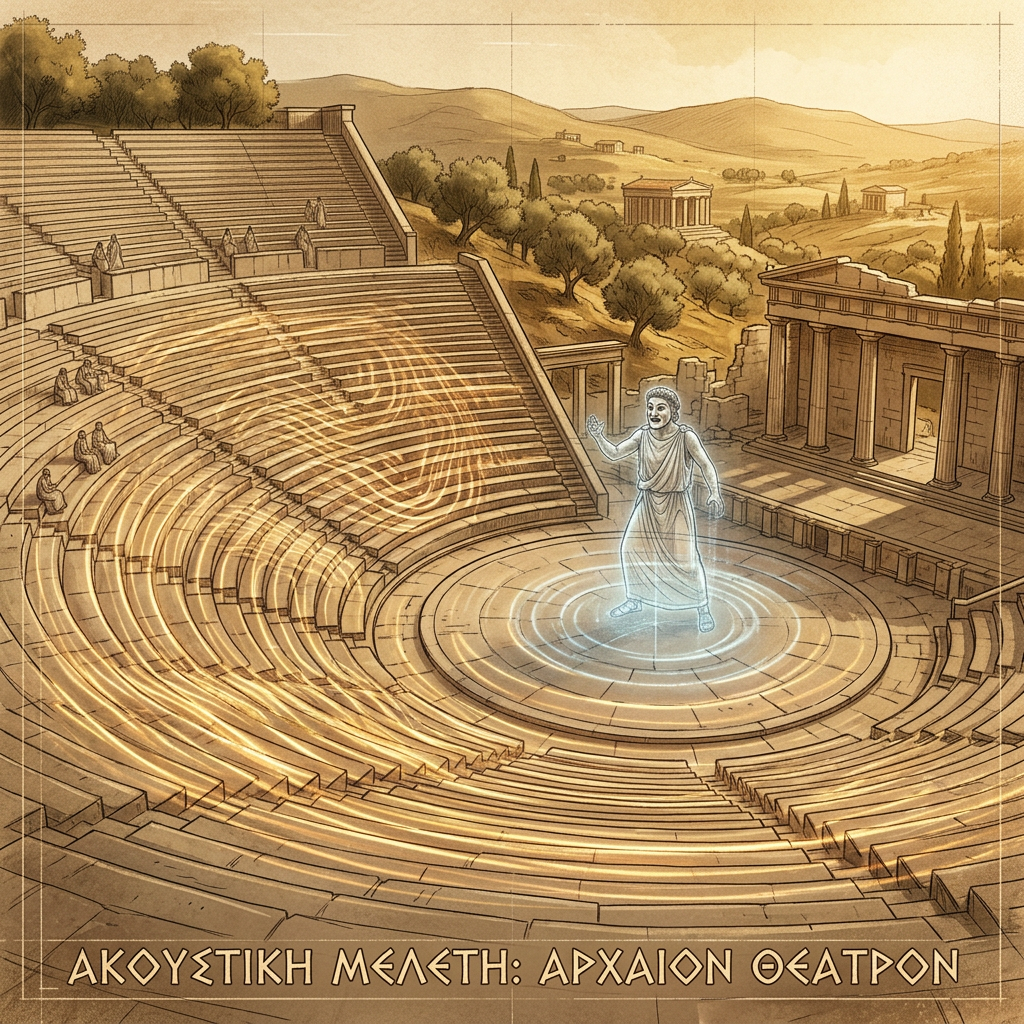
A team of researchers at MIT and the Ephesus Foundation have utilized a new AI platform called "Echo-Synthesizer" to reconstruct the exact acoustic properties of the Great Theater of Ephesus. By analyzing the density of the marble, the curvature of the seating, and the prevailing wind patterns of the 2nd century, the AI has recreated how a Greek tragedy would have sounded to 25,000 spectators.
This innovation in heritage technology allows historians to understand the spatial dynamics of ancient performances with unprecedented accuracy. The project has already revealed that the theater was specifically engineered to amplify the lower frequencies of the male voice, compensating for the lack of modern microphones.