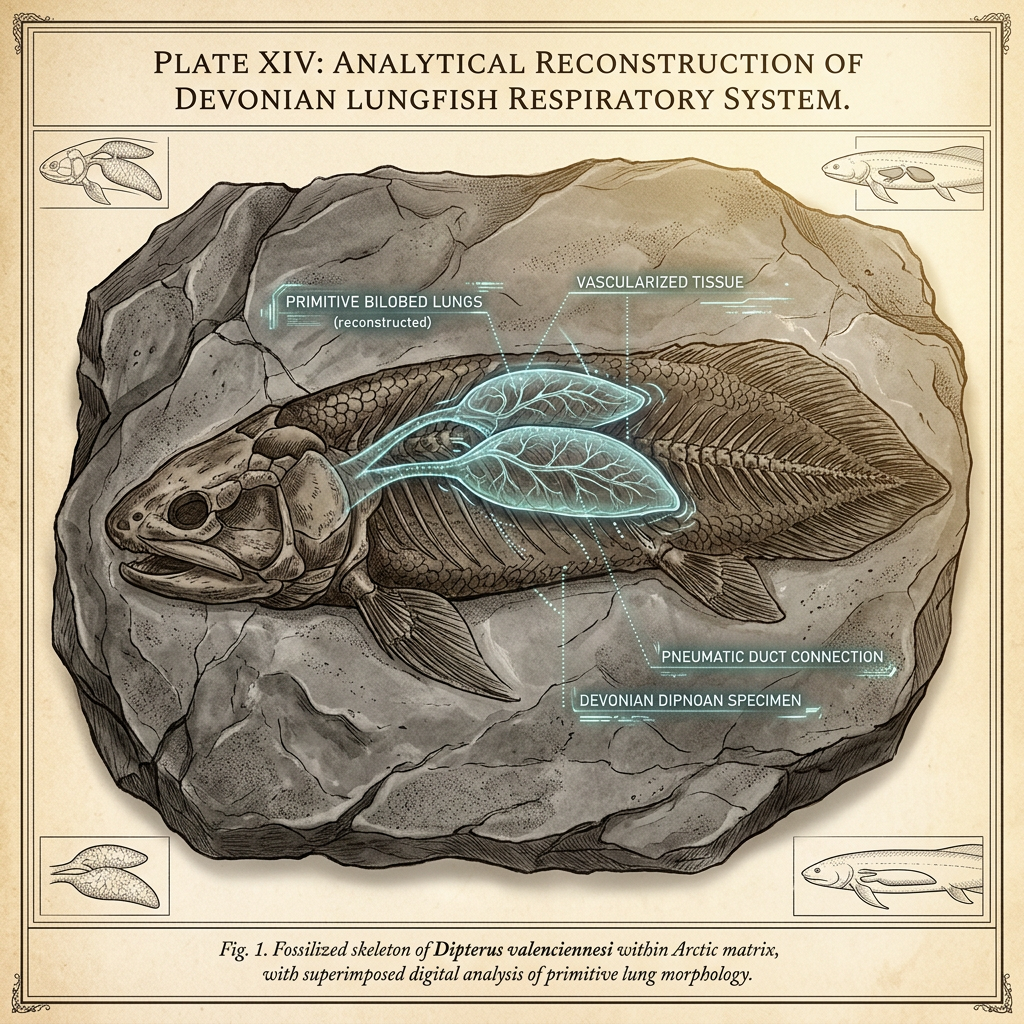
Paleontologists working on Ellesmere Island in the Canadian Arctic have announced the discovery of an exceptionally preserved fossil of a primitive lungfish dating back to the Devonian period, approximately 400 million years ago. Unlike most fossilized remains that consist only of bone, this specimen features rare preservation of soft tissue, including the delicate structures of its primitive lung sacs and branchial gills.
This finding provides the most direct evidence to date regarding the evolutionary transition from water-breathing to air-breathing in early vertebrates. The fossil, belonging to a previously unknown species, suggests that complex respiratory systems were already well-developed in aquatic species before their descendants transitioned to life on land. Researchers utilized high-resolution synchrotron X-ray microtomography to map the internal organ systems without damaging the stone matrix.