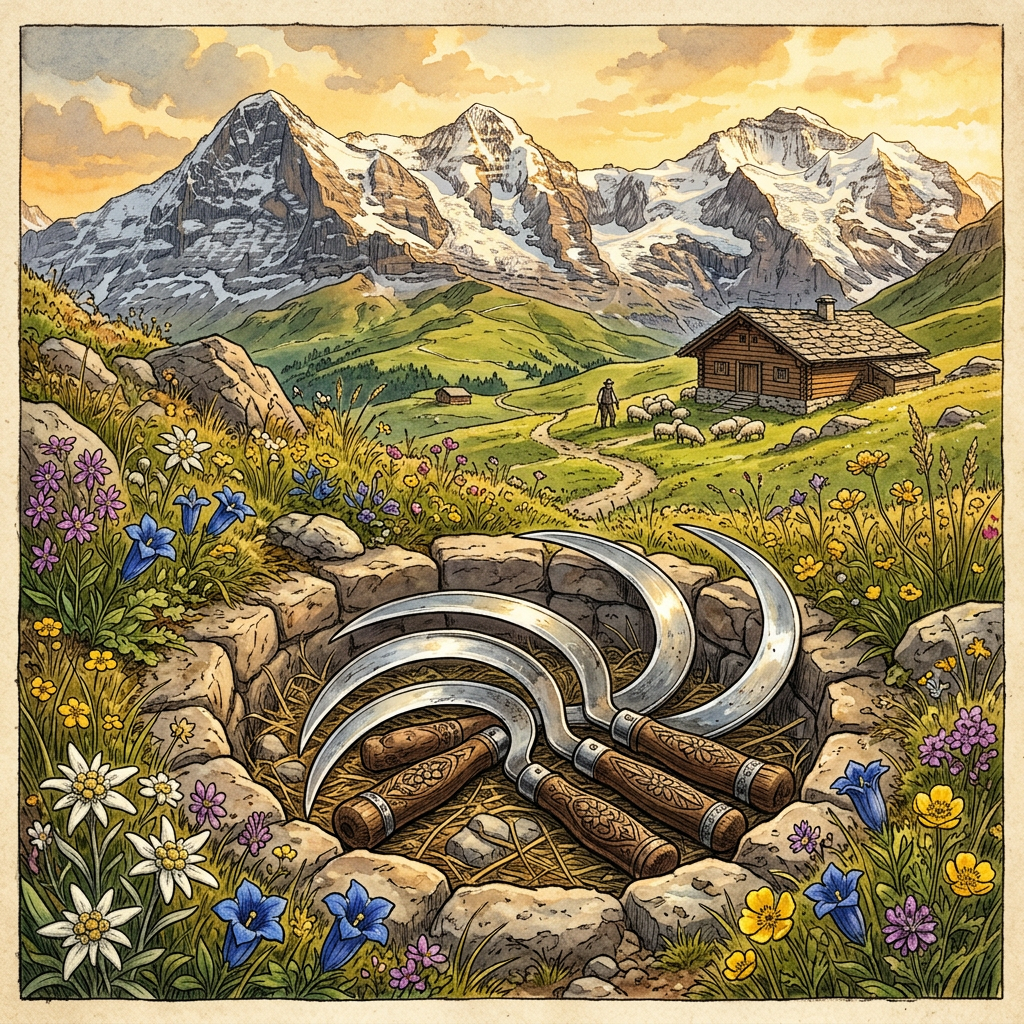
In a high-altitude meadow in the Swiss Canton of Graubünden, archaeologists have discovered a ritual deposit containing seven tin-plated bronze sickles. Unlike functional agricultural tools, these blades are thin, brittle, and highly decorated with solar motifs. They were found carefully placed inside a stone-lined pit alongside the remains of wild Alpine flowers and charred mountain herbs.
The site is being linked to the ancient Celtic 'First-Hay' festival, a celebration that marked the beginning of the summer grazing season (transhumance). These sickles were likely used by priests to symbolically cut the first bundle of grass, signaling that the high pastures were spiritually cleansed and ready for the community's cattle.
This find is significant because it highlights the specialized nature of Alpine ritual life. The presence of tin-plating, which would have made the sickles shine like silver in the sun, suggests a strong solar component to the festival, emphasizing the role of the sun in ripening the grasses and protecting the herds during their summer stay in the peaks.