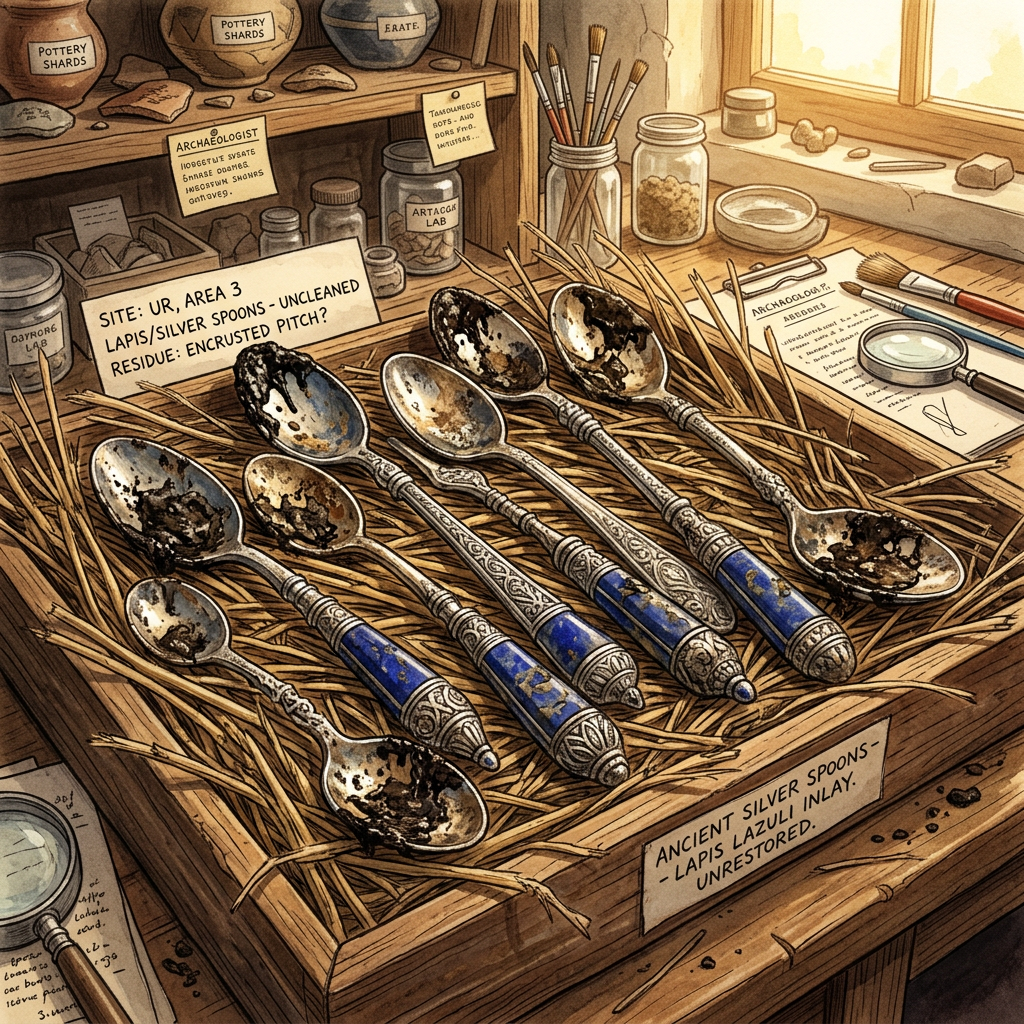
A rare cache of silver and lapis lazuli-encrusted ritual spoons has been discovered at the ancient Sumerian site of Girsu. The spoons, which feature handles shaped like stylized palm fronds, were found in the storerooms of a temple dedicated to Ningirsu. Chemical analysis of the dark, sticky residue on the spoons has confirmed it to be a concentrated date syrup.
Archaeologists suggest these utensils were used specifically for the 'Festival of the Sweet Grove,' a previously obscure harvest celebration. During this event, priests and community leaders would engage in a communal tasting of the season's first date honey to symbolize the benevolence of the gods. The ornate nature of the spoons indicates that the consumption of this syrup was a highly choreographed liturgical act.
The find also included cuneiform tablets detailing the rations of dates and barley allocated for the festival, providing a rare look into the economic logistics required to host such a large-scale religious event. This discovery shifts our understanding of early Mesopotamian festivals toward a more diverse range of agricultural products beyond just grain and beer.