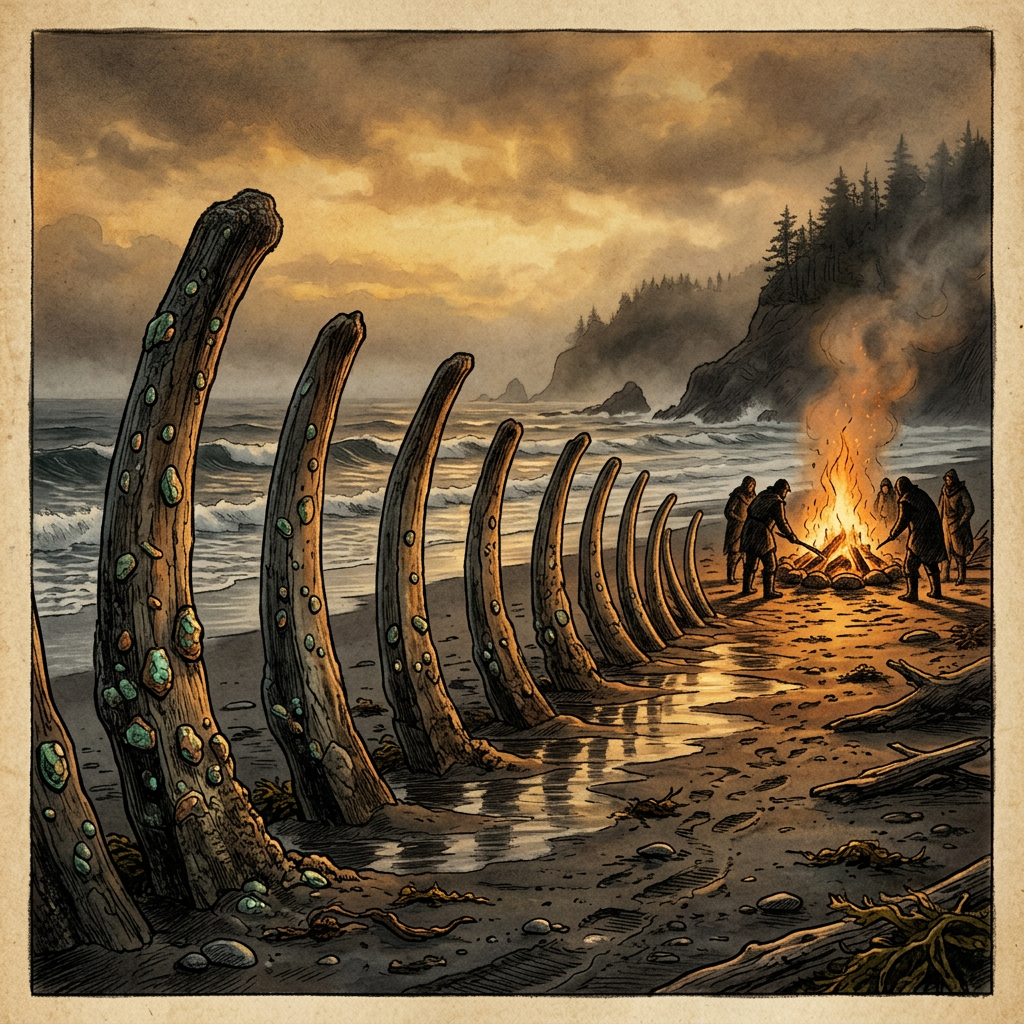
Archaeological work along the central Oregon coast has uncovered a series of massive, carved whalebones embedded with native copper nuggets. Known as 'sound-stones,' these artifacts were positioned in a semi-circular array on a high coastal terrace overlooking the Pacific Ocean. Experts believe they were used as lithophones—percussive instruments—during ancient 'Tide-Calling' festivals.
The site appears to have been a major gathering point where coastal communities met to signal the arrival of the seasonal grey whale migration. The use of copper, which was traded from distant interior sources, indicates the high ritual value of these celebrations. The 'Tide-Calling' rites likely combined practical signaling for hunters with spiritual ceremonies meant to honor the spirits of the sea.
Evidence of large-scale fire pits and shellfish middens surrounding the stones suggests that these festivals were accompanied by massive communal feasts. The rhythmic striking of the copper-studded bones would have produced a metallic resonance capable of carrying for miles over the sound of the crashing surf.