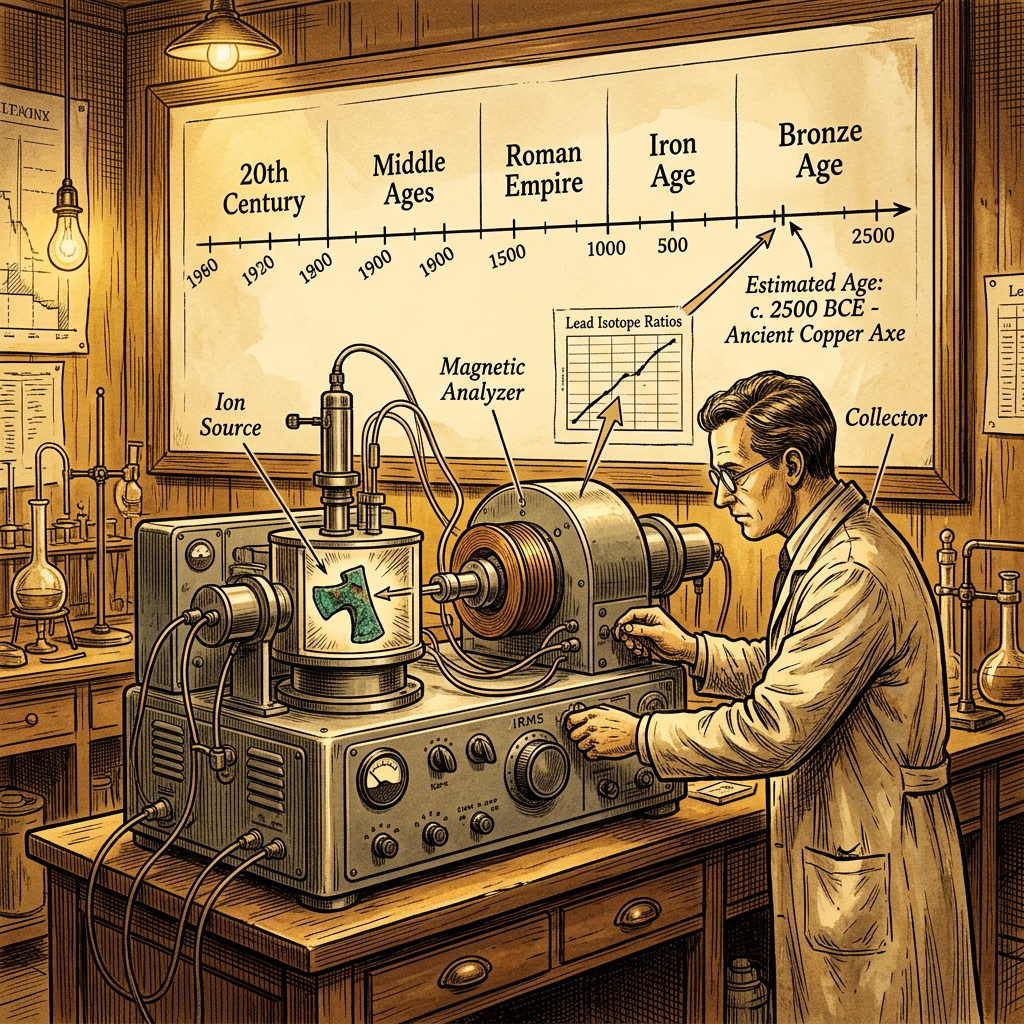
A new research paper in Science Advances introduces a refined dating methodology utilizing Europium-151 isotopic chronometry to examine metal artifacts from the Upper Ganges. The study has successfully pushed back the timeline of the regional transition to advanced metallurgy, placing the emergence of the 'Copper-Hoard' culture at approximately 3300 BCE, nearly 400 years earlier than previous radiocarbon estimates suggested.
This innovative technique measures the radioactive decay of rare-earth elements trapped within slag inclusions, providing a more stable chronological marker than organic carbon. The results suggest that early Bronze Age metallurgical centers in India were developing independently and simultaneously with those in Mesopotamia, necessitating a revision of global trade and technological diffusion maps for the fourth millennium BCE.