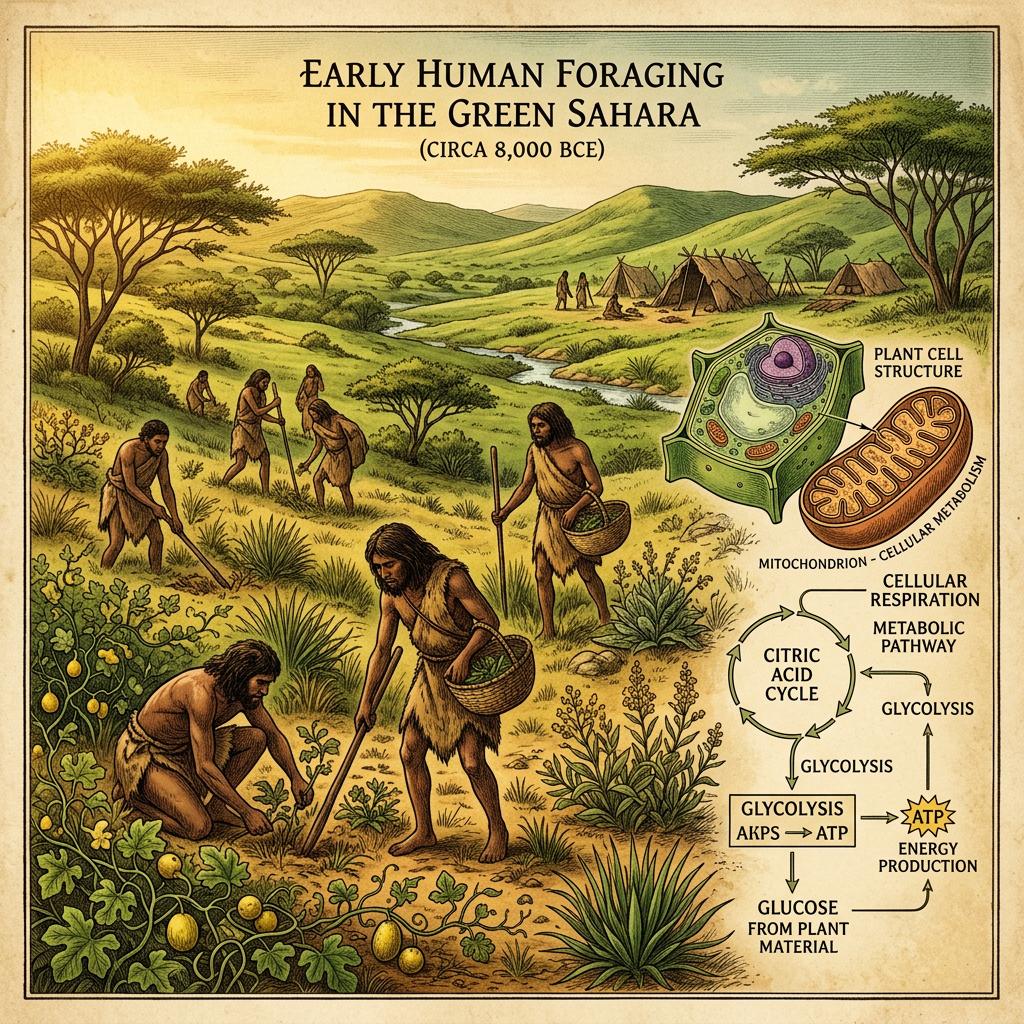
A paleogenetic study featured in The Proceedings of the National Academy of Sciences (PNAS) has analyzed the remains of early Holocene foragers from the Nile-Sahara borderlands. The research identifies the earliest known genetic selection for the SLC26A6 gene, which enhances the body's ability to process and eliminate oxalates, a toxic compound found in high concentrations in many desert-adapted plants.
This genetic adaptation allowed these early populations to expand their dietary range to include tubers and succulents that would have been lethal to other groups. The study provides a critical genetic link between the environment and human survival strategies during the 'Green Sahara' phase, showing how metabolic evolution paved the way for the eventual transition to organized agriculture in the Nile Valley.