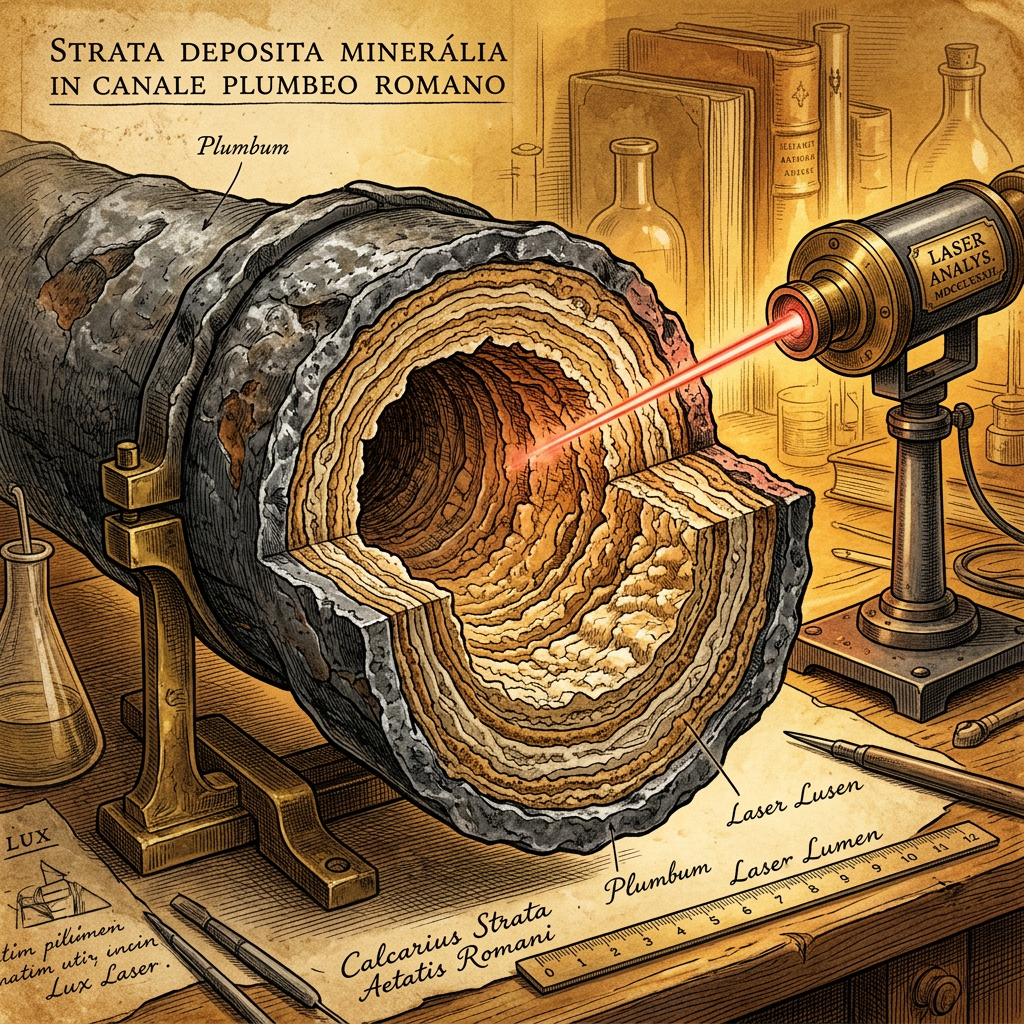
A high-precision study published in the Journal of Archaeological Science has utilized lead isotope fingerprinting to analyze the urban water infrastructure of Pompeii. Researchers from the University of Lyon conducted a chemical analysis of the city’s fistulae (lead pipes), discovering that the Roman municipal authorities engaged in a highly organized, sub-decadal maintenance cycle to mitigate the effects of volcanic mineralization and pipe degradation.
The study provides new evidence that the Aqua Augusta aqueduct system was managed with a level of bureaucratic and technical sophistication previously underestimated. By tracking the specific isotopic signatures of the lead, the research team was able to differentiate between original installations and later repairs, suggesting that the city's plumbing was overhauled at least four times in the century leading up to the eruption of Vesuvius.