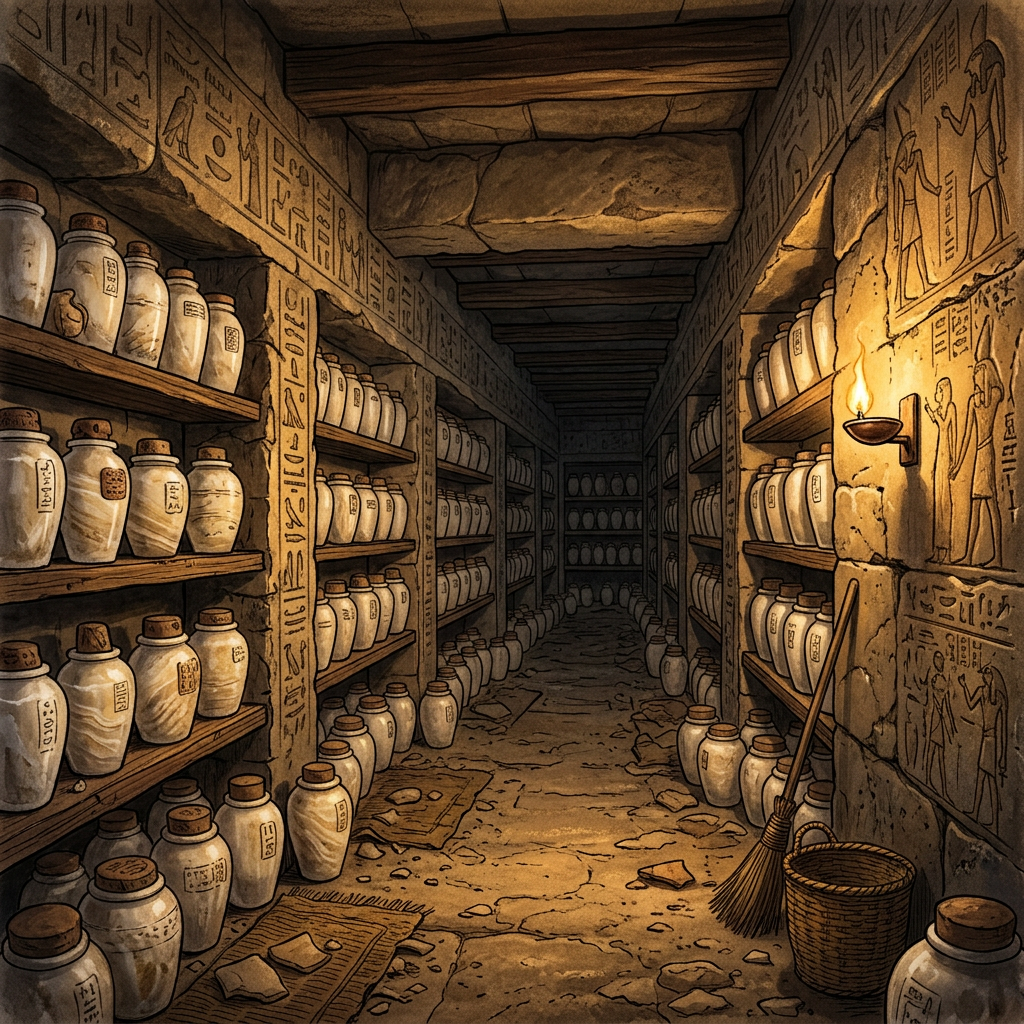
A joint Egyptian-German archaeological mission has discovered a 3,000-year-old storage facility in Middle Egypt dedicated to the preservation of high-value embalming resins. The site contains dozens of intact white alabaster jars, many still retaining their original clay seals and residues of aromatic substances like frankincense and cedar oil imported from the Levant.
Initial analysis of the site suggests this was a centralized hub for the preparation of high-status funerary materials. The discovery of specific ledger markings on the jars provides new data on the economic value and bureaucratic management of ritual preservatives during the New Kingdom period.