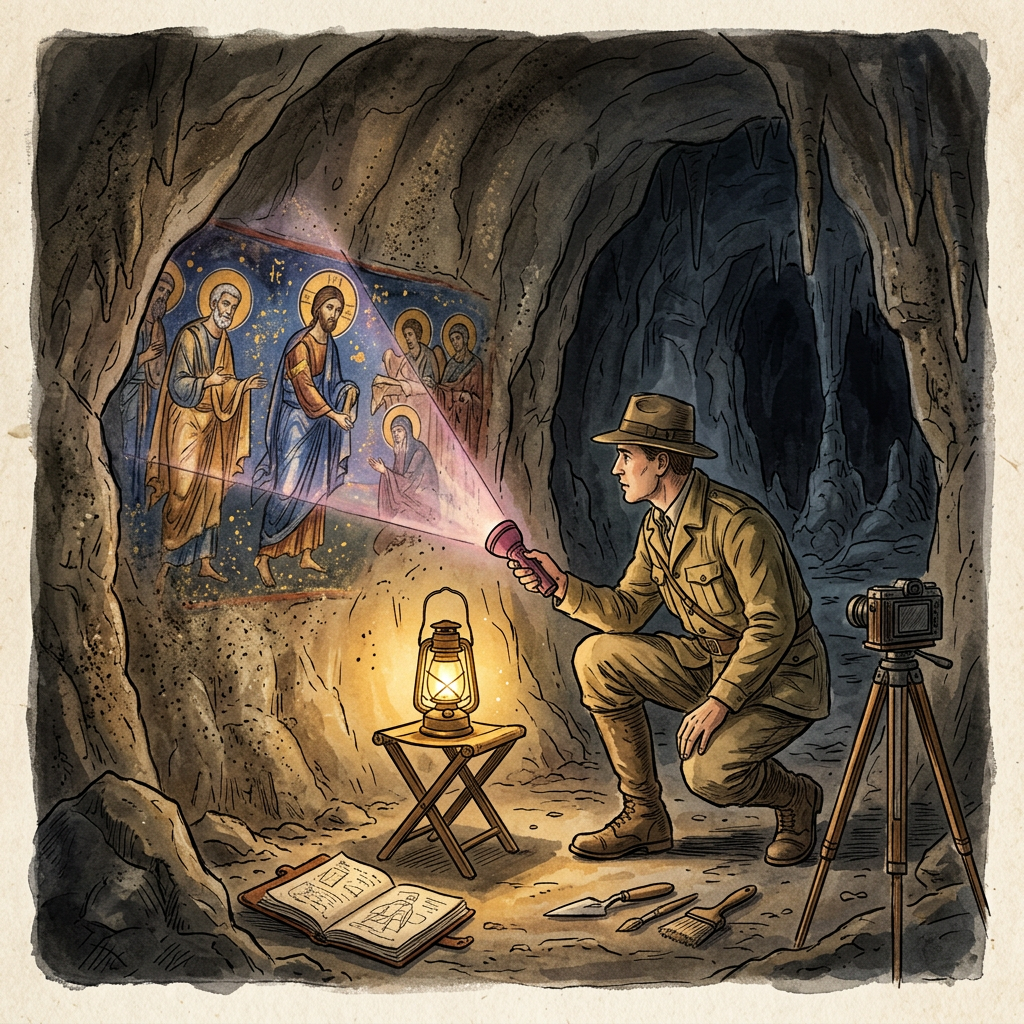
Archaeologists working in the Lasta Mountains of Ethiopia have utilized infrared-fluorescence imaging to reveal hidden 13th-century murals beneath layers of soot and lime-wash in rock-cut churches. The technology detects minute chemical traces of ancient pigments like lapis lazuli and ochre that are invisible to the naked eye.
The newly discovered frescoes depict rare scenes of Aksumite-inspired architecture and unique hagiographies of local saints, providing a missing link between early Christian art and the Solomonic dynasty. Conservationists are now using this non-invasive tech to map the restoration of these fragile religious sites without disturbing the original stone surfaces.