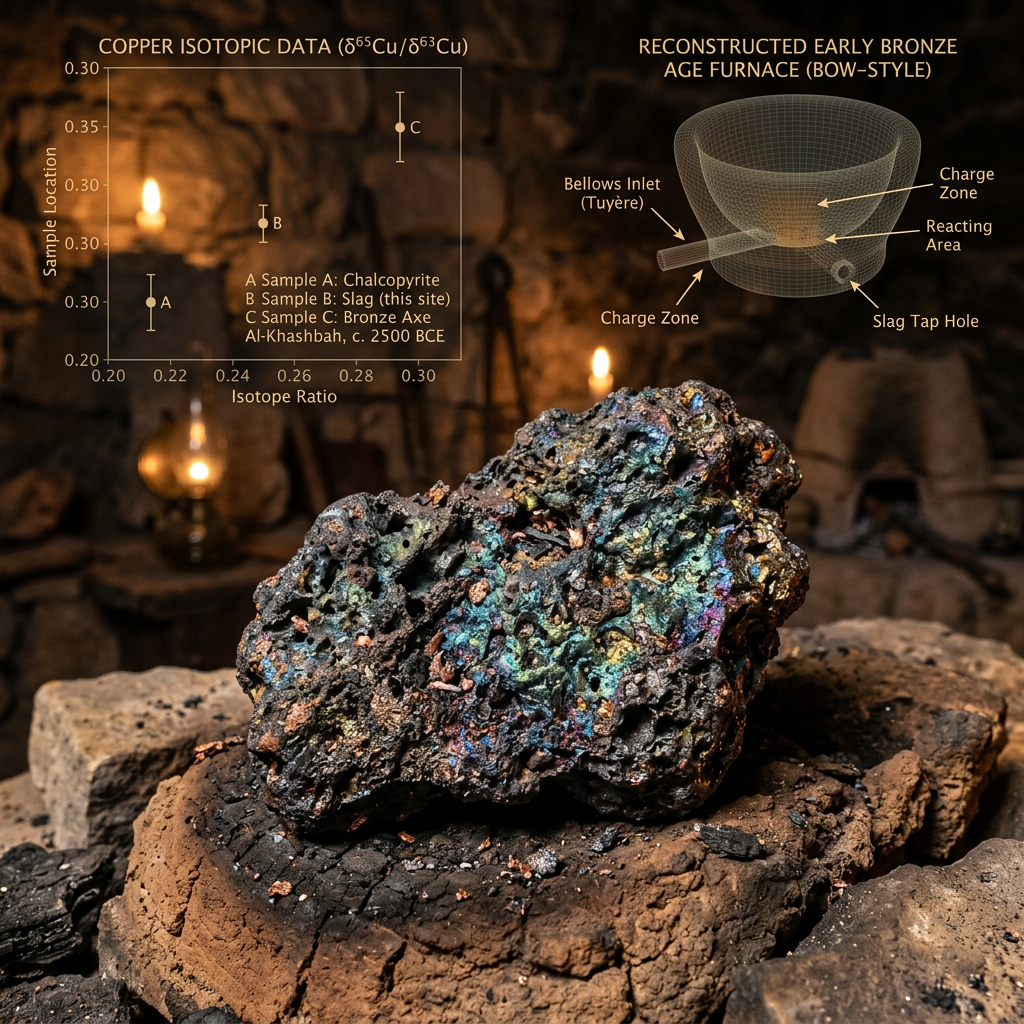
A pioneering study published in the Journal of Archaeological Science has introduced a high-precision dating technique utilizing Ytterbium-171 isotopes to analyze copper slag and furnace remains in the Aravalli Range. This methodology has allowed researchers to push back the timeline of sophisticated copper-smelting in the region by nearly four centuries, establishing a new baseline for the emergence of the Early Bronze Age in Northwest India.
The research reveals that these ancient metallurgical guilds were employing controlled-atmosphere reduction processes far more advanced than previously assumed. By measuring the isotopic fractionation in the slag, scientists confirmed that the ores were processed at temperatures exceeding 1,200 degrees Celsius, indicating a mastery of refractory materials and forced-air ventilation systems by 3300 BCE.