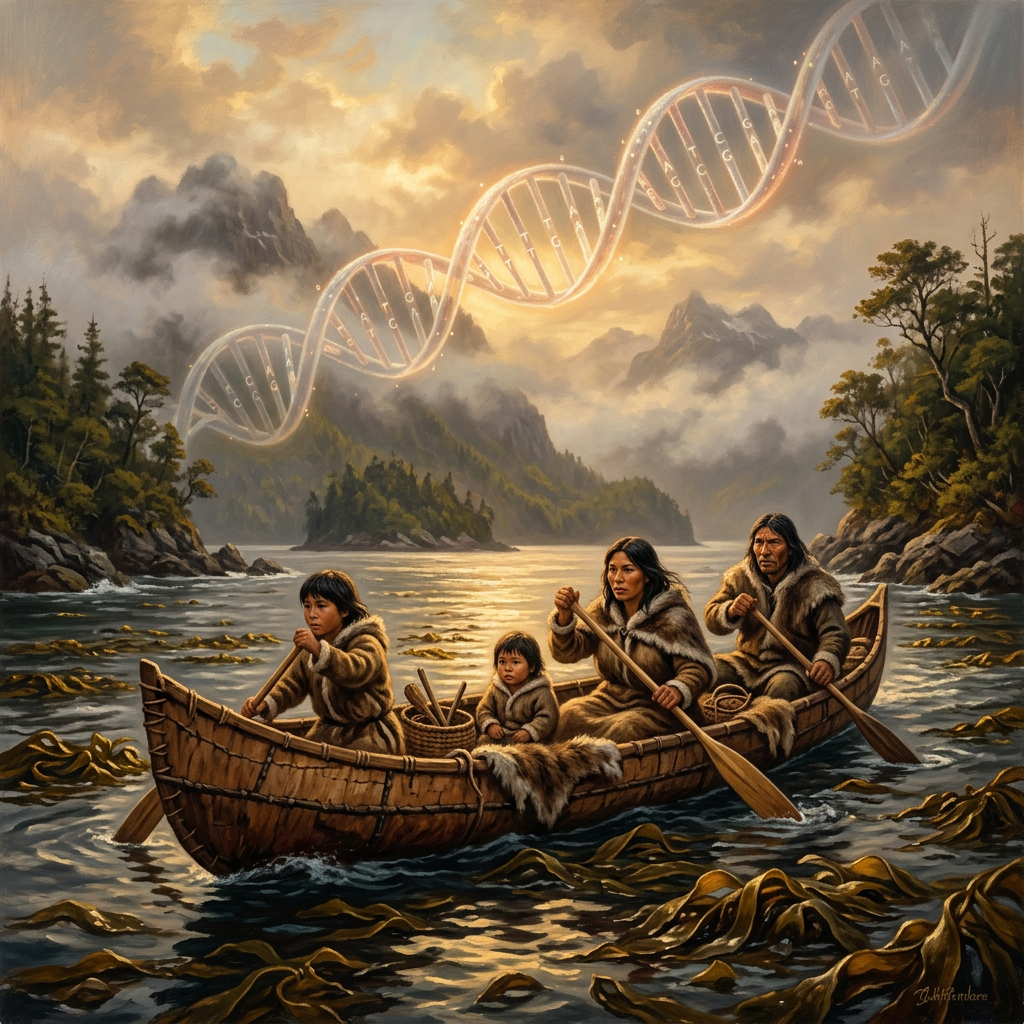
In a landmark paper appearing in Nature Communications, an international team of geneticists has detailed the findings of a paleogenomic analysis performed on skeletal remains from the remote Patagonian Archipelago. The study identifies a distinctive "ghost lineage" that split from early South American groups approximately 16,000 years ago, specializing in a maritime lifestyle long before the expansion of inland terrestrial cultures.
The data highlights specialized genetic adaptations for high-iodine metabolism, which allowed these individuals to thrive on a diet primarily composed of kelp-forest organisms. This discovery provides the first concrete genetic evidence of a successful coastal migration route along the Pacific rim, challenging traditional models of human dispersal across the southern reaches of the Americas.