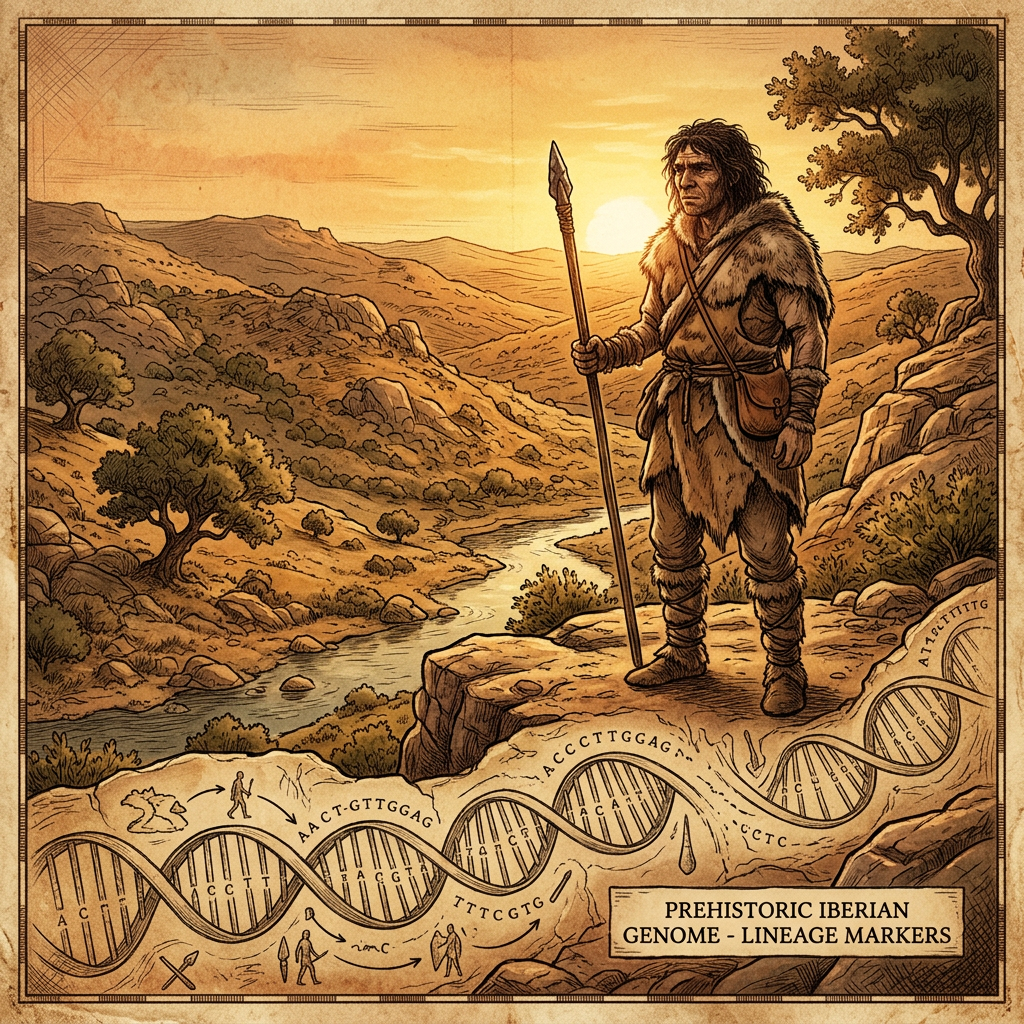
Published in Science Advances, a new genomic analysis of hunter-gatherers from the Iberian Plateau has revealed the earliest known instance of human adaptation to high-selenium soil environments. The study focused on remains dating to the early Holocene and found specific markers in the GPX1 gene that enhanced the metabolic processing of dietary selenium, which was present in toxic concentrations in the local flora.
This genetic selection allowed a small population to remain isolated on the plateau for millennia, thriving in a niche environment that was otherwise inhospitable to broader European migrations. This research provides a new look at how localized mineral toxicity acted as a selective pressure, shaping the genetic map of prehistoric Europe and creating unique regional population bottlenecks.