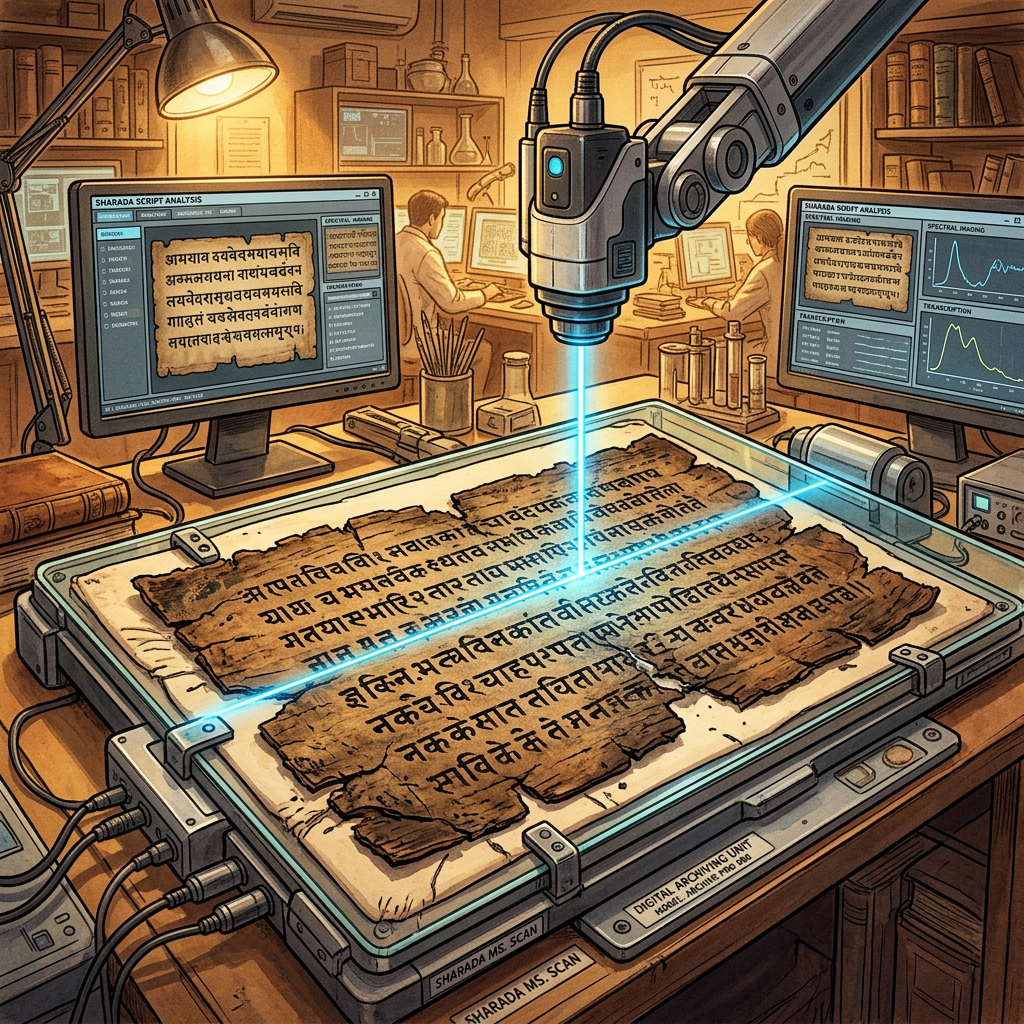
Researchers using advanced machine-learning algorithms have successfully reconstructed and translated a collection of fragmented birch-bark manuscripts in the Sharada script recovered from a high-altitude Himalayan cave. The deciphered texts contain lost Sanskrit treatises focusing on theoretical fluid mechanics, specifically the systematic observation and mathematical modeling of capillary action in wick-based lighting systems.
The manuscripts provide evidence that 8th-century Indian scholars had developed a proto-theoretical framework for surface tension and the transport of fluids through porous media. These findings suggest that the development of specialized lamps for ritual and scientific use was underpinned by a sophisticated understanding of hydrostatics and heat-induced suction, predating similar Western observations by several centuries.