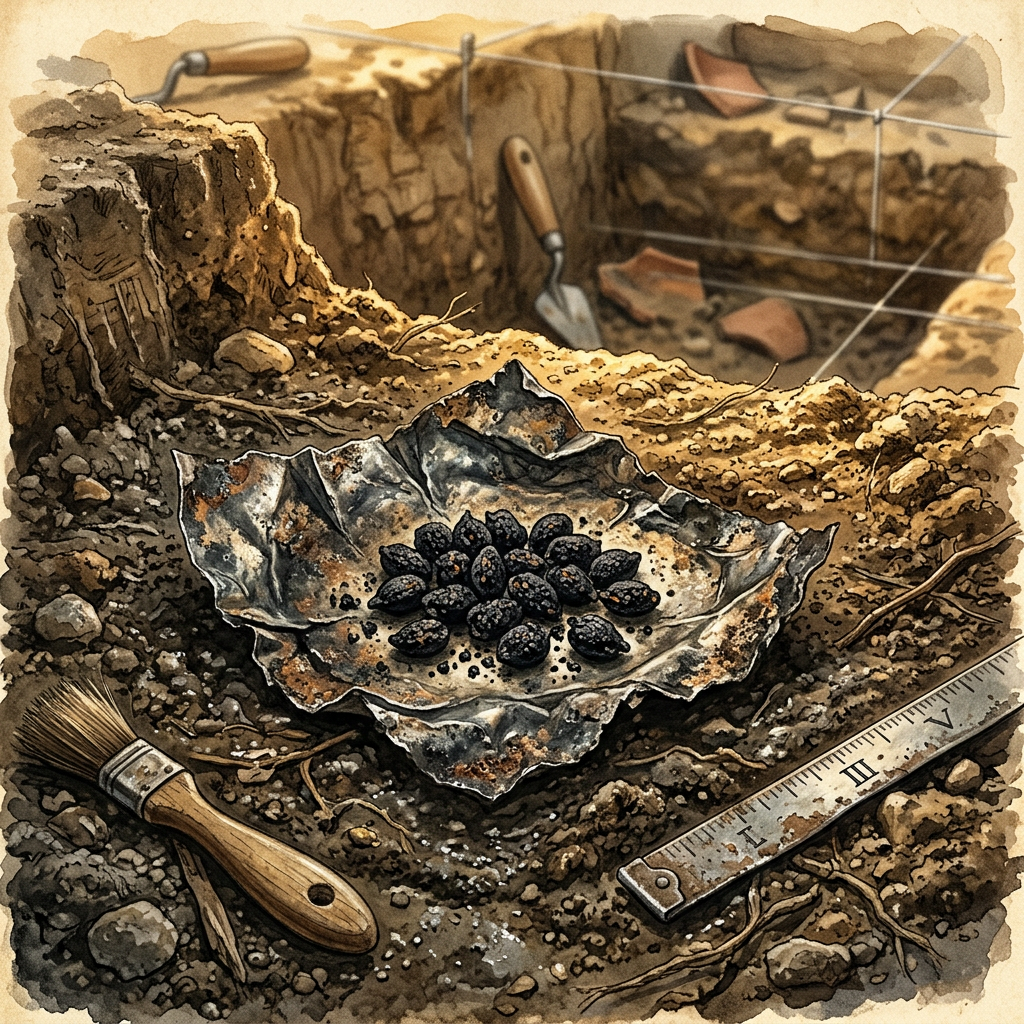
Archaeologists working in the foothills of the Trans-Ili Alatau mountains near Almaty, Kazakhstan, have uncovered a remarkable cache of silver-pressed apple seeds and charred wild fruit remains. The discovery, dated back to the 5th century BC, suggests that the region’s status as the genetic birthplace of the domestic apple was celebrated through large-scale communal festivals long before the formalization of the Silk Road.
Excavations at the site revealed a series of ceremonial pits containing thousands of apple seeds, some of which were found inside small silver foil wraps. Researchers believe these were part of a "First-Fruit" ritual where the earliest harvest of the season was offered to mountain spirits to ensure the health of the groves. The presence of elaborate drinking vessels alongside the fruit remains points to a sophisticated culture of seasonal banqueting.