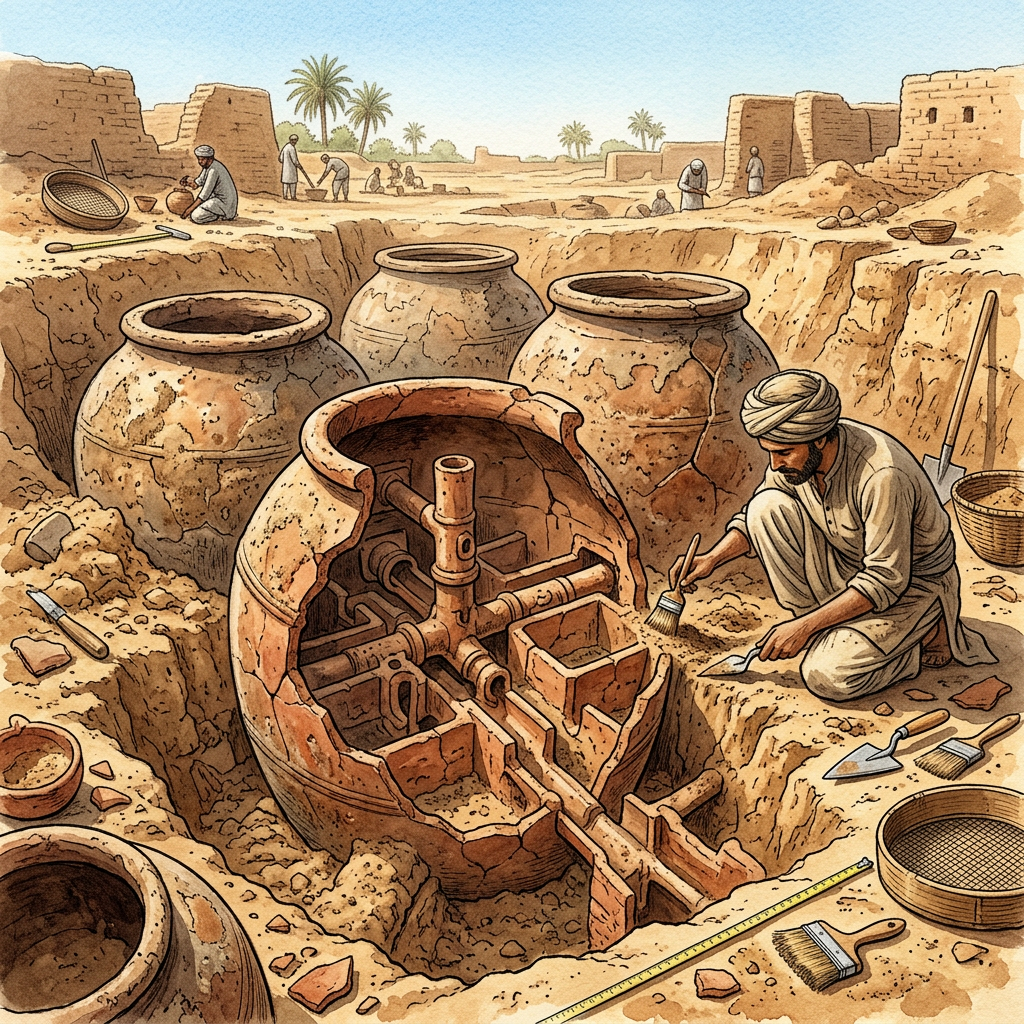
Excavations at a newly identified Mature Harappan site in rural Haryana have revealed a sophisticated brine-purification laboratory dating back to 2500 BCE. The complex features a series of interconnected clay fractional-distillation vats and sediment-settling tanks used to extract high-purity mineral salts for industrial chemical use, rather than mere consumption.
Research suggests that the Indus Valley inhabitants were using these purified salts as fluxes in high-heat metallurgy and for the glazing of high-status ceramics. The site includes a dedicated administrative wing with standardized clay seals, indicating that this purification process was a state-controlled monopoly. This discovery significantly elevates our perception of Harappan chemical engineering and their mastery of saline resources.