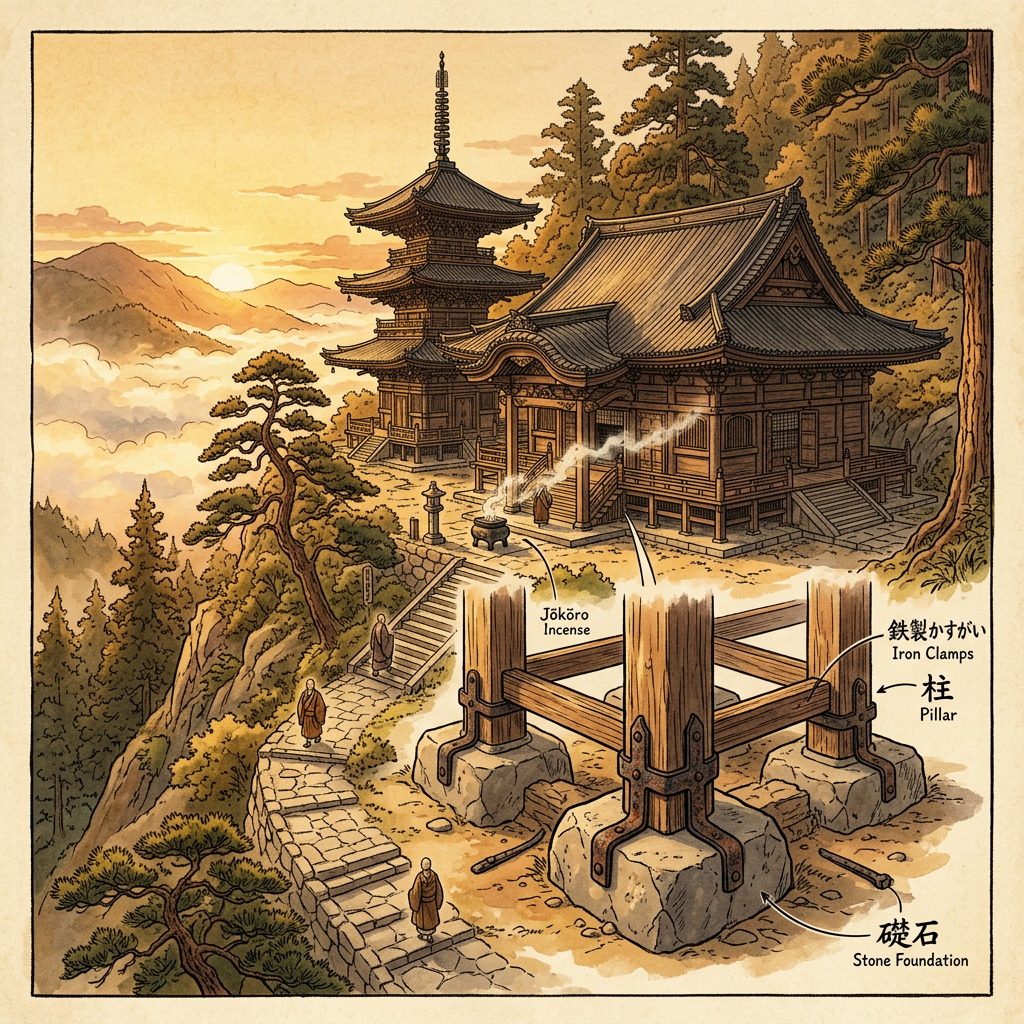
Structural conservators restoring a remote 8th-century Buddhist temple along the Kumano Kodo pilgrimage route have discovered an advanced anti-seismic engineering system. During the dismantling of the main hall’s foundation, engineers found a network of heavy iron clamps and cedar-wood wedges designed to allow the building to shift slightly during tremors without collapsing.
This 'flexible foundation' technology, previously thought to have evolved centuries later, suggests that Nara-period architects had a sophisticated understanding of seismic wave dissipation. Restoration work is now focusing on replicating these ancient techniques using period-appropriate materials to ensure the temple remains a safe haven for modern-day hikers and spiritual seekers for another millennium.