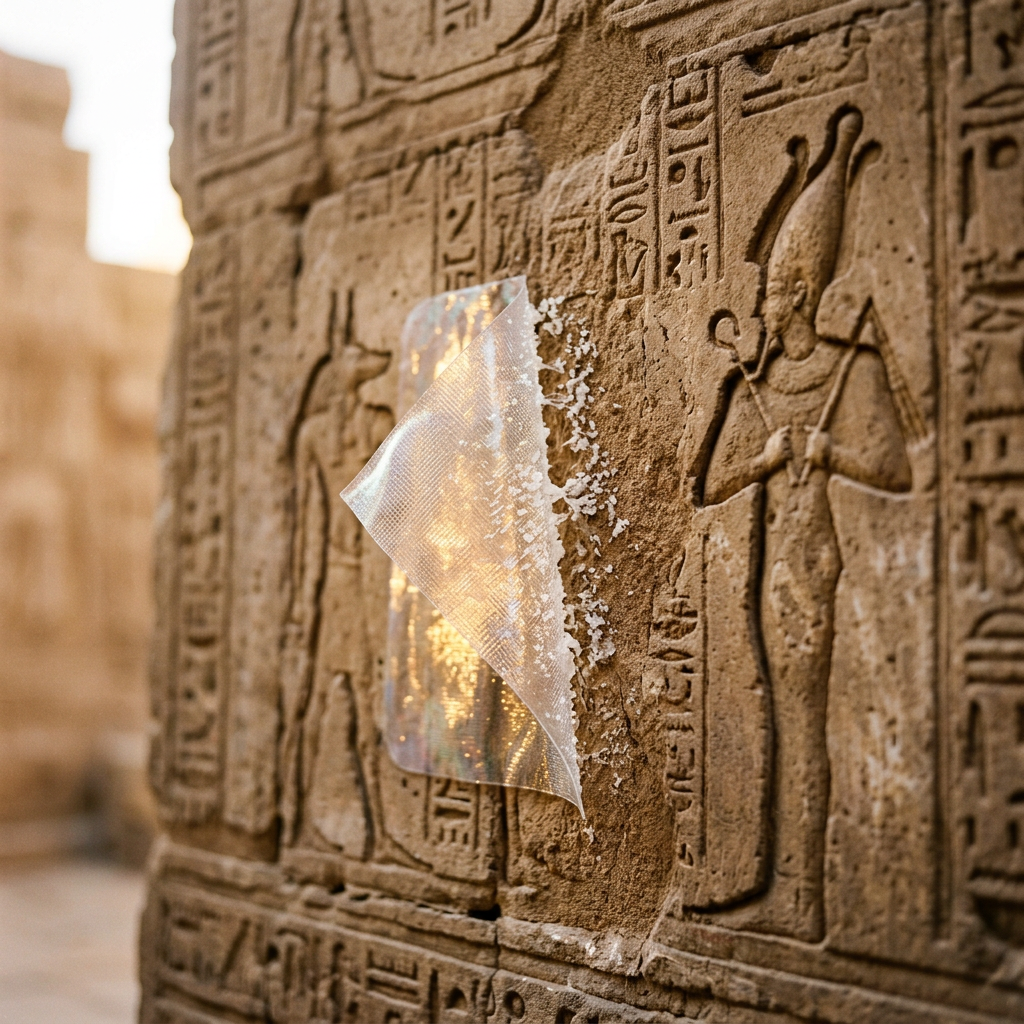
Archaeologists and material scientists have successfully deployed a revolutionary 'molecular-sieving' nanopatch to preserve the sandstone surfaces of the Temple of Edfu. This innovative technology was designed to address the critical issue of salt crystallization, which has been eroding the temple's intricate Ptolemaic-era reliefs for decades due to rising groundwater and fluctuating humidity levels.
The nanopatch works by creating a selective barrier that allows water vapor to escape while trapping harmful salt ions within a replaceable nanostructured membrane. This process effectively 'vacuums' the destructive minerals out of the ancient stone without requiring invasive chemical treatments or physical scraping, which often causes further damage to the fragile inscriptions. The Egyptian Ministry of Tourism and Antiquities has hailed the project as a major milestone in heritage preservation technology.