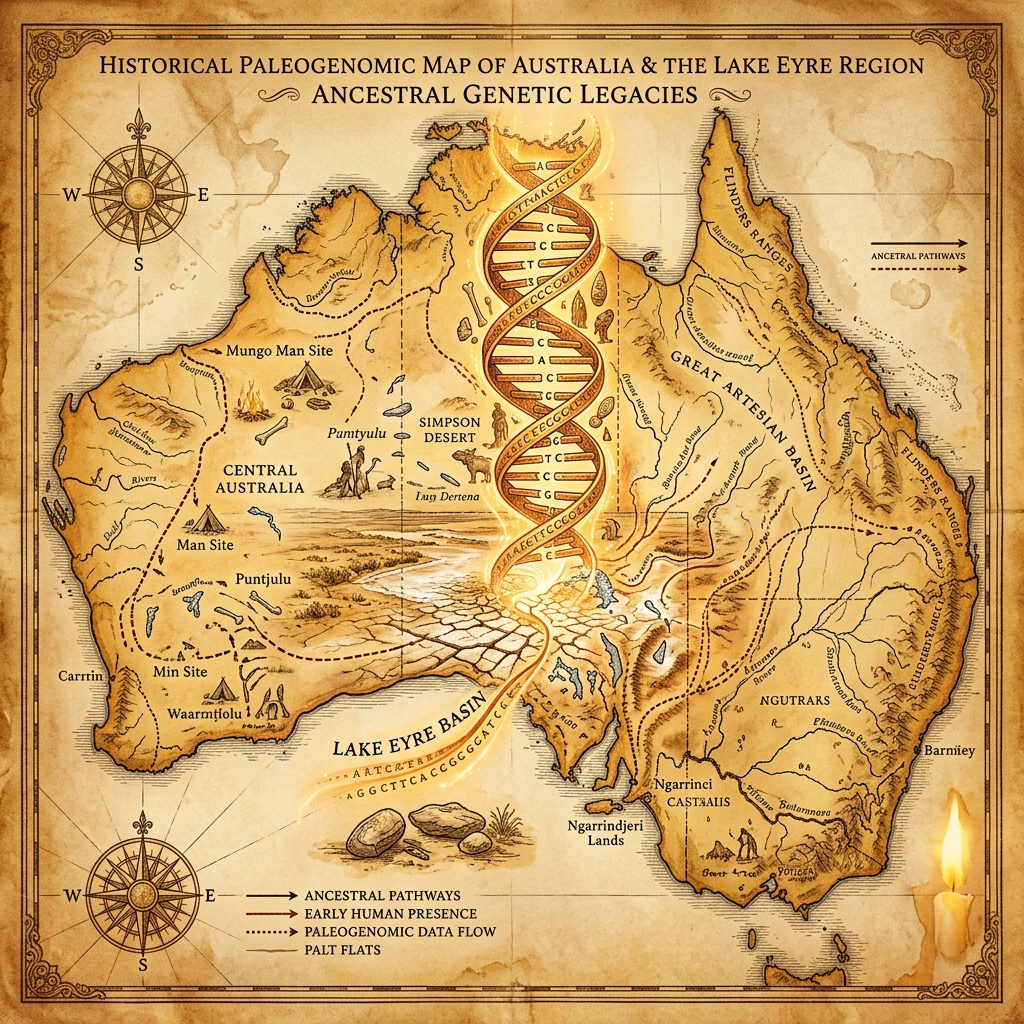
Research published in Nature Genetics details the analysis of a 13,000-year-old skeleton discovered near the Lake Eyre Basin in Australia. This paleogenomic study has identified a unique set of genetic markers associated with salt-water processing and urea recycling, representing the earliest known human adaptation to extreme arid-zone ecosystems.
The study reveals that this specific Pleistocene lineage diverged during a period of intense desertification, developing physiological resilience to high-salinity diets and episodic water scarcity. These findings significantly alter our understanding of the timelines for human colonization of the Australian interior and the speed at which specialized evolutionary defenses against environmental stressors can emerge in isolated populations.