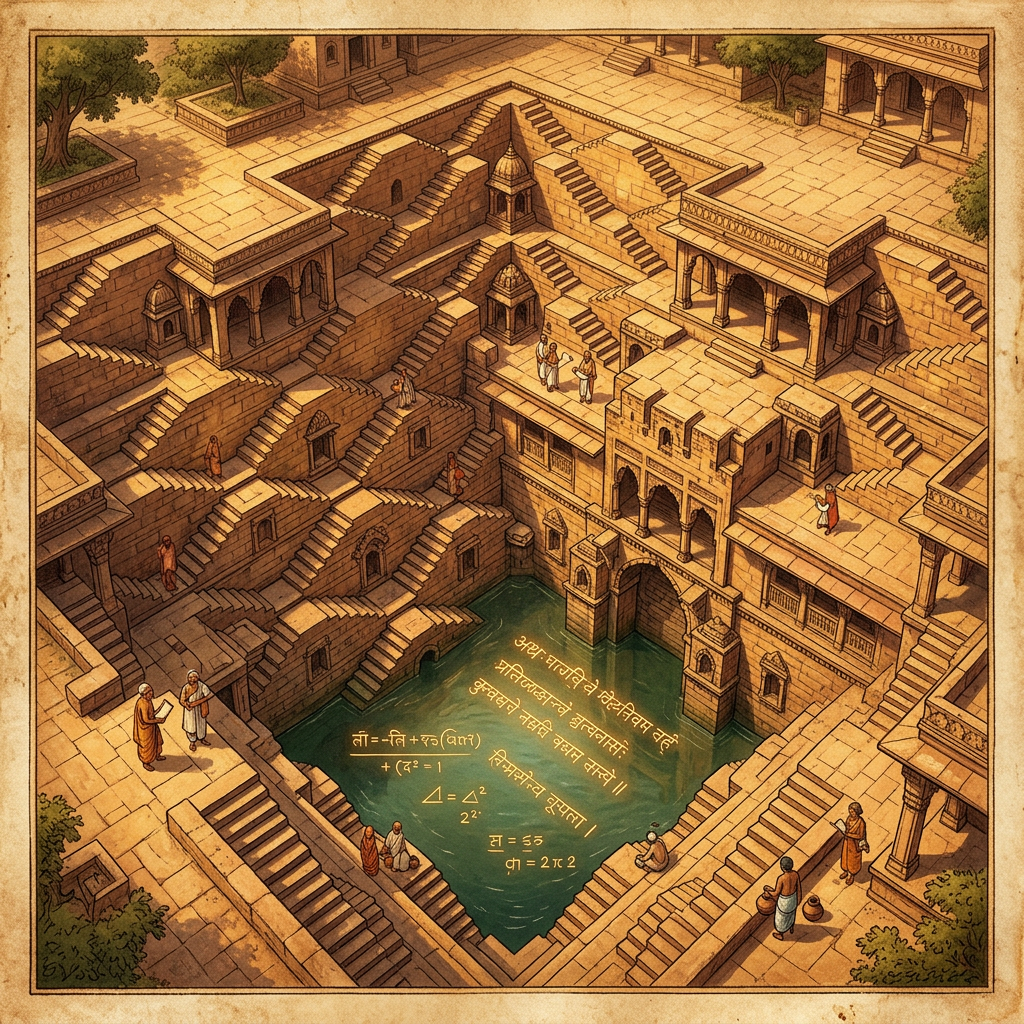
A new research paper in the International Journal of Sanskrit Studies has identified a series of sophisticated algorithms within the 11th-century Kattara-Jyotisha manuscript. These algorithms provide a mathematical model for calculating viscous drag and fluid velocity in open-channel irrigation systems, demonstrating a high level of engineering mathematics in medieval India.
The study highlights how these ancient models were likely applied to the construction of the massive temple reservoir networks of the era. By accounting for non-linear variables such as surface tension and turbulent flow, the Sanskrit treatises allowed engineers to maximize the efficiency of gravity-fed water distribution systems across varying terrains, ensuring sustainable agricultural yields during erratic monsoon seasons.