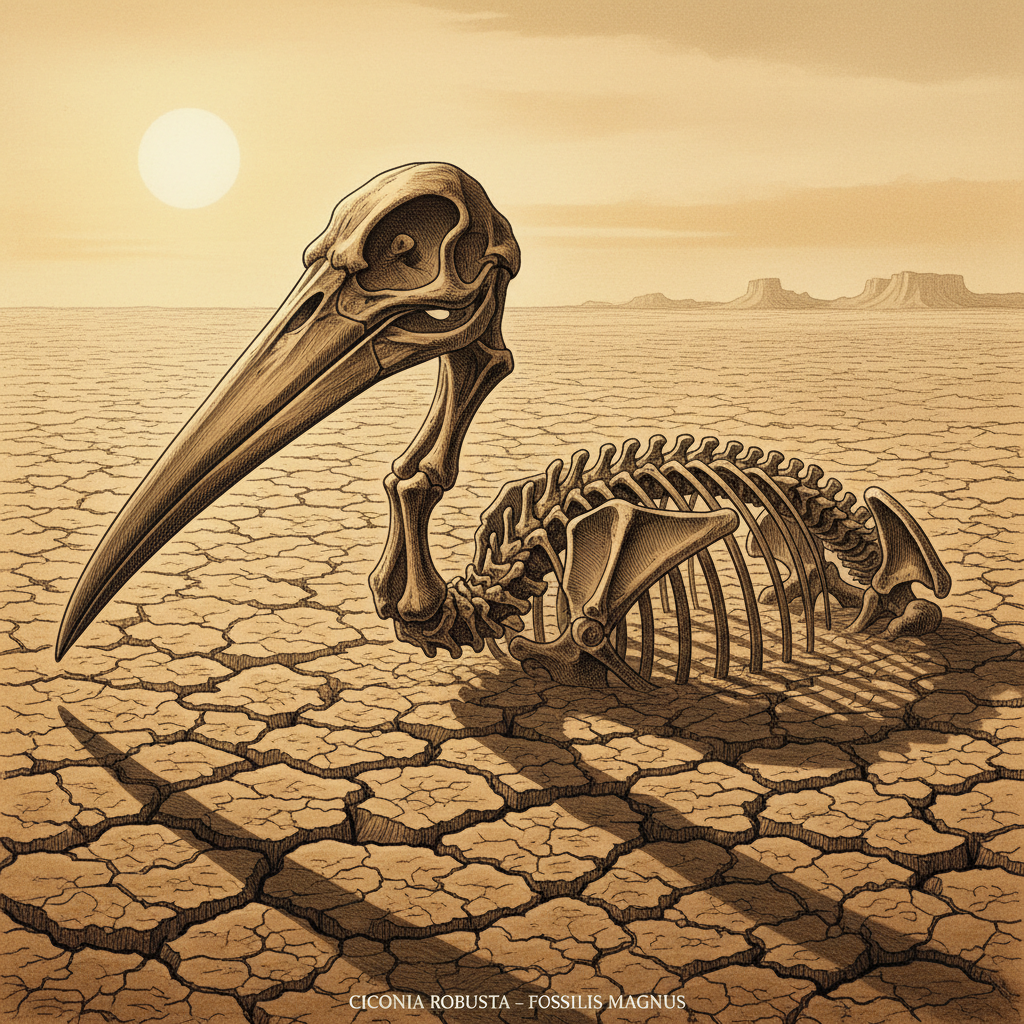
Paleontologists in Argentina's Gran Chaco region have announced the discovery of a nearly complete skeleton of a previously unknown Miocene-era stork species. Standing nearly five feet tall, the specimen, named Ciconia gigas, features a remarkably preserved rhamphotheca, or keratinous beak sheath, which is rarely fossilized. This finding provides unprecedented insight into the feeding mechanics of ancient flightless or near-flightless wading birds.
Analysis of the specimen's robust limb bones suggests it was a terrestrial predator that specialized in hunting small mammals and reptiles across the semi-arid plains. The site also yielded fossilized pellets, containing the remains of primitive rodents, confirming the bird's status as a top-tier hunter in its ecosystem. This discovery effectively doubles the known diversity of large-bodied storks in South America during the middle Miocene.