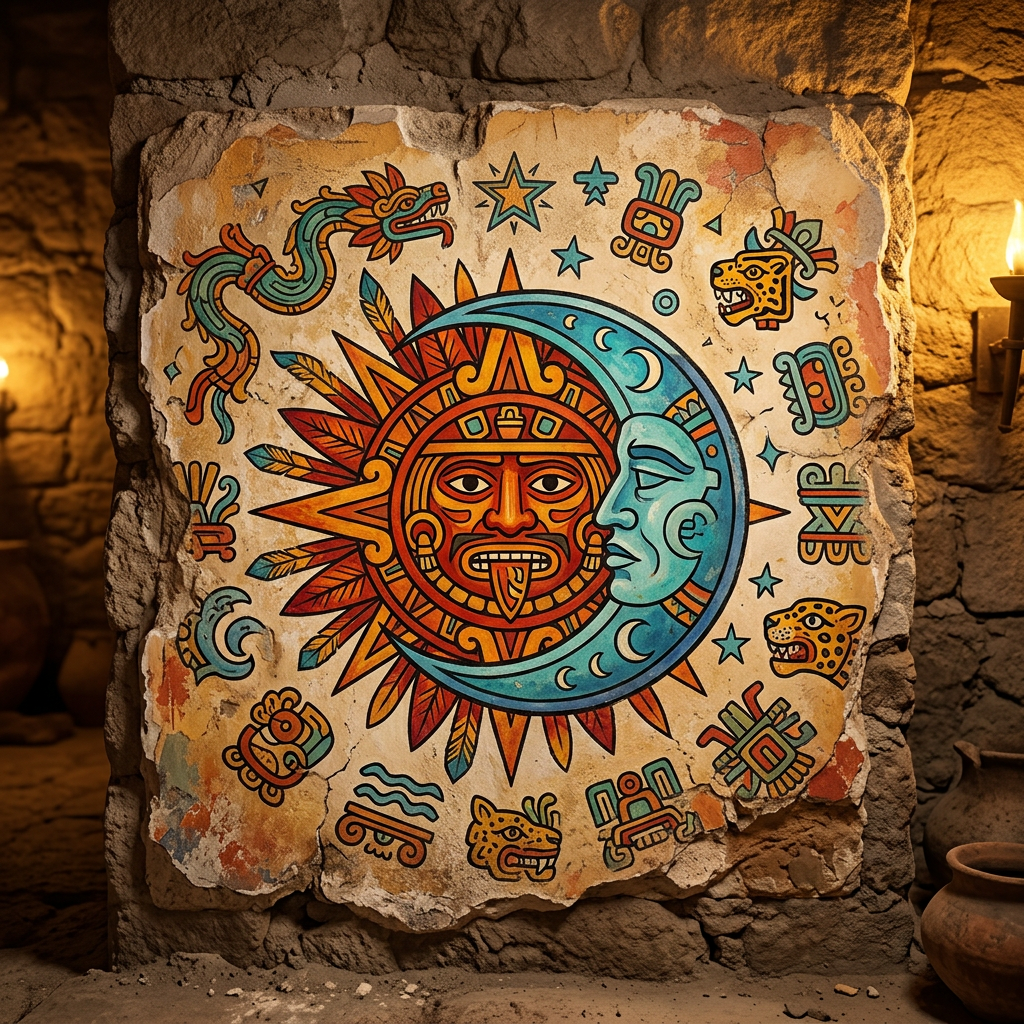
Linguists and archaeologists have successfully deciphered a sequence of glyphs found in the "Apartment Compounds" of Teotihuacan, revealing a sophisticated Nahua metaphysical system dating to the 5th century CE. The texts outline a philosophy of 'Luminous Duality' (Ometeotl-Tonatiuh), which posits that the universe is sustained by the constant tension between shadow and solar fire.
Unlike later Aztec interpretations, these Teotihuacano texts emphasize ethical balance over ritual sacrifice, suggesting that human conduct must mirror the rhythmic cycles of the stars to maintain cosmic stability. This breakthrough provides the most comprehensive evidence yet of a high-philosophical tradition in the pre-classic Americas.