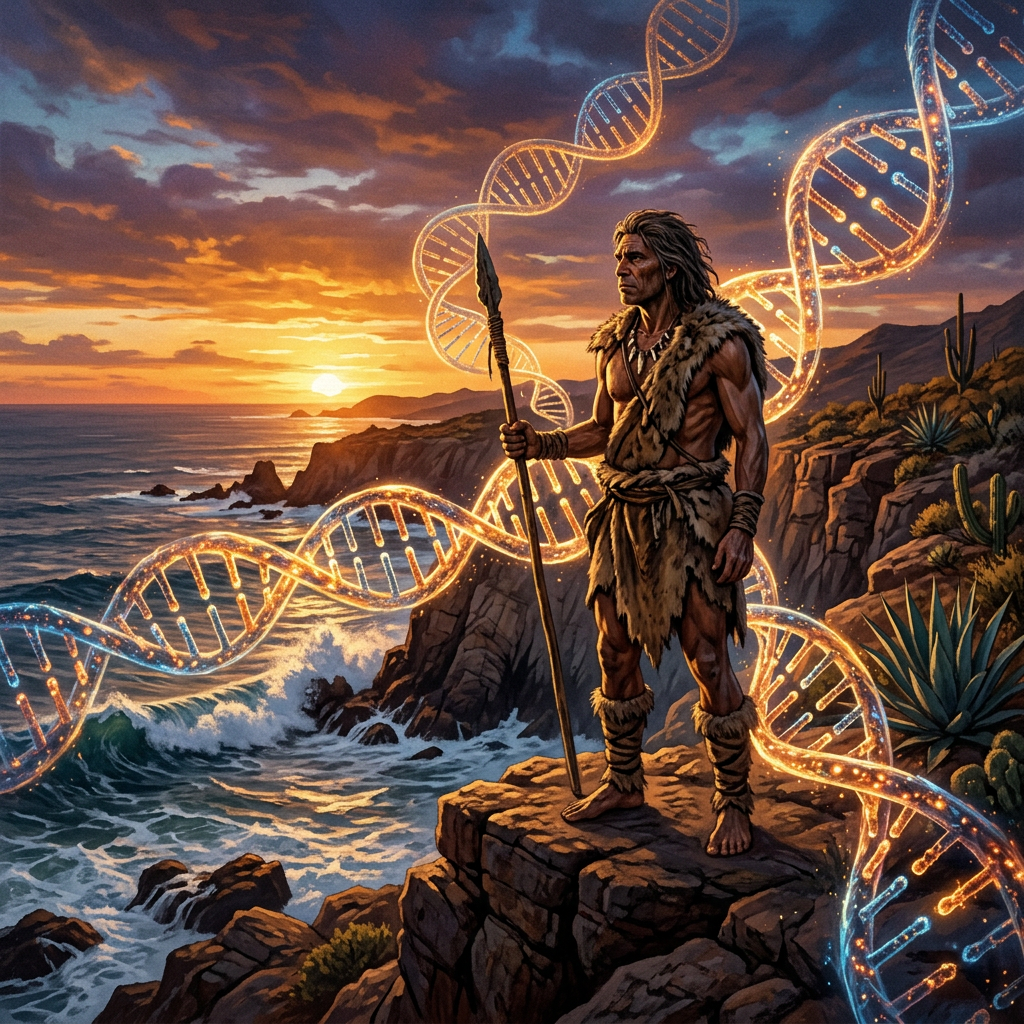
A breakthrough paleogenomic study published in Nature Communications has revealed a previously unidentified genetic lineage from human remains discovered in the coastal caves of Baja California. The analysis of these 13,000-year-old samples indicates a distinct 'ghost' population that diverged from early Paleo-American groups shortly after the crossing of the Bering Land Bridge, characterized by unique genetic markers for hyper-saline metabolic efficiency.
Researchers utilized high-coverage shotgun sequencing to determine that these individuals possessed specialized adaptations to high-iodine marine diets and extreme arid-zone dehydration. This discovery suggests that the colonization of the Americas involved multiple, highly specialized migration pulses that adapted rapidly to unique coastal ecosystems, challenging the traditional model of a single, uniform expansion through the interior corridors.