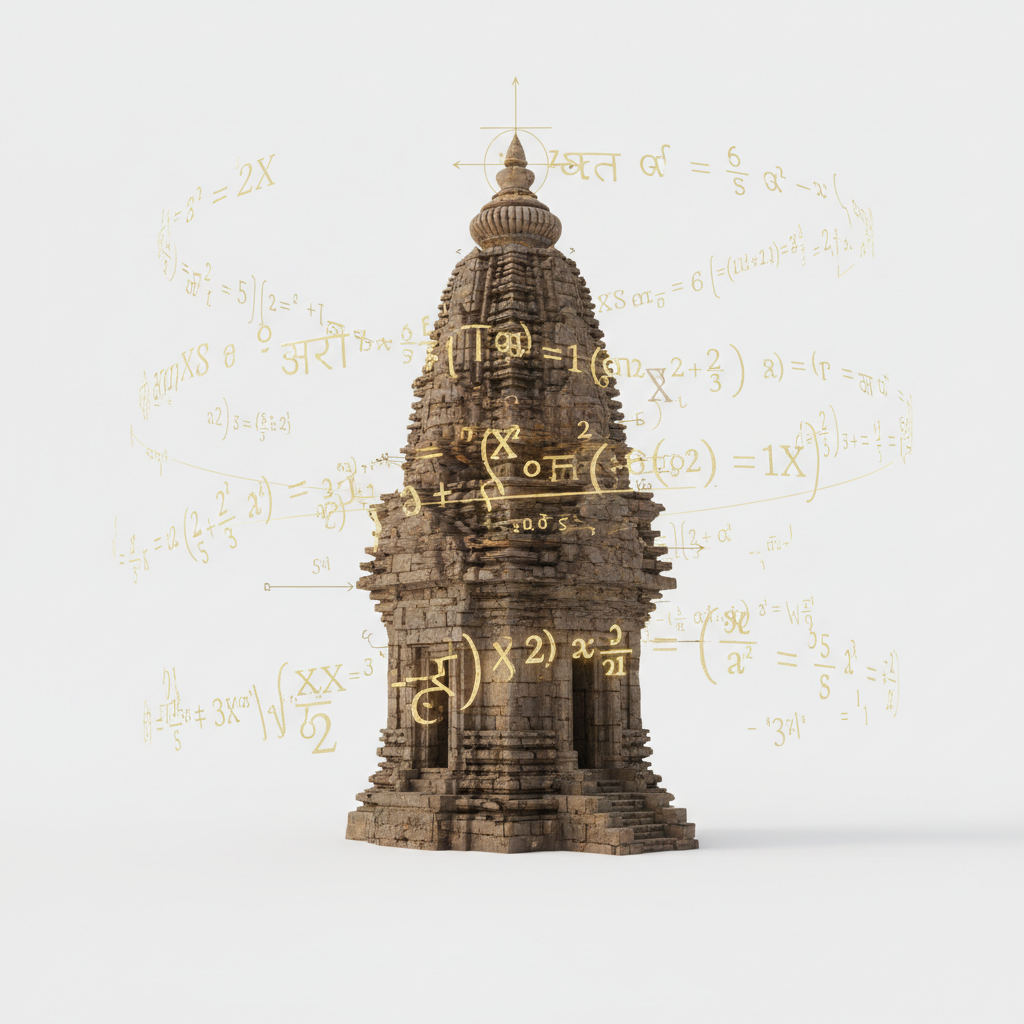
Researchers in the Vedic Studies Quarterly have published a computational analysis of the 10th-century Ganita-Ratna-Mala, identifying a series of recursive algorithms designed to model torsional vibration in large-scale metallic foundations. The manuscripts contain early mathematical notations for harmonic resonance and damping coefficients, suggesting their application in the structural engineering of monumental temple spires.
The study highlights how the author utilized infinite series expansions to calculate the stress thresholds of various sacred alloys. This research provides critical evidence of the intersection between theoretical mathematics and practical metallurgy in medieval India, proving that complex mechanical oscillations were understood and mitigated through formal logic.