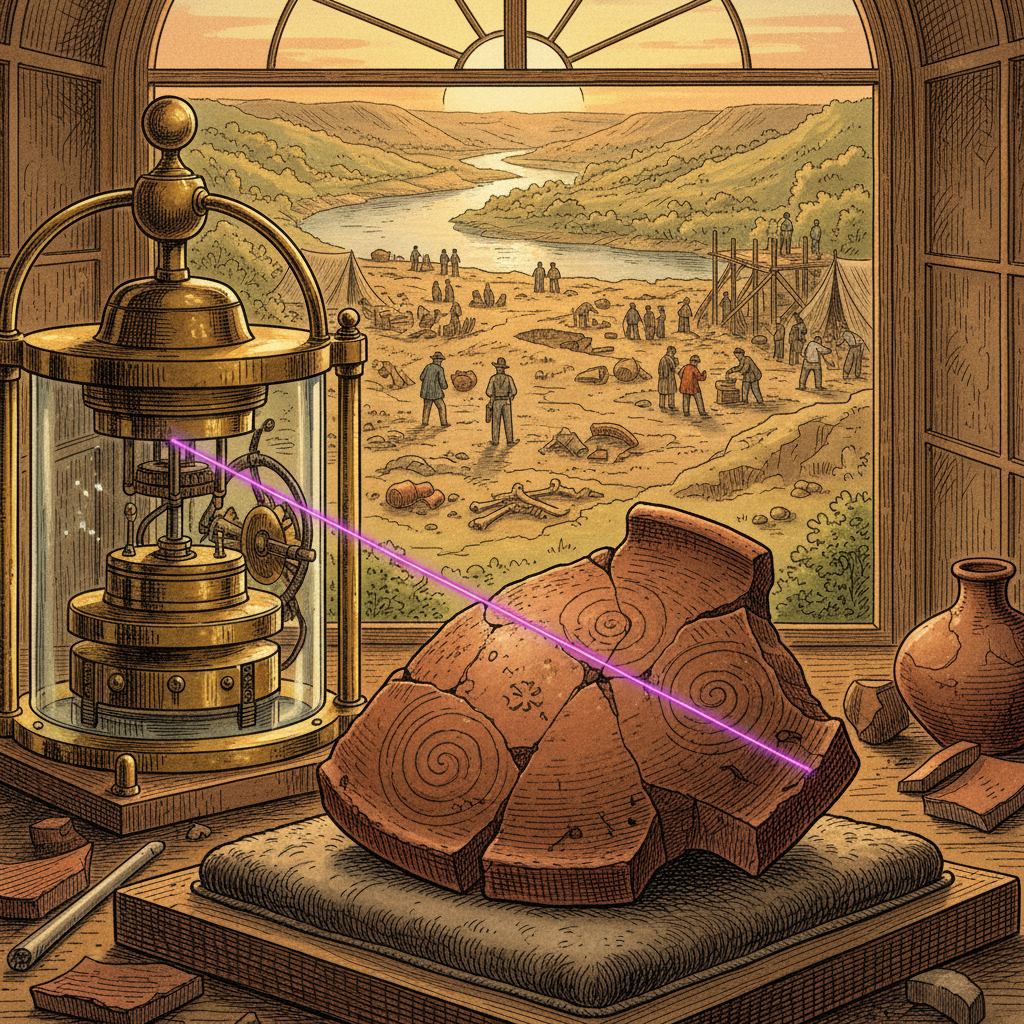
A team of geochemists has introduced a pioneering Rubidium-87 isotopic chronometry methodology to date the earliest Neolithic settlements in India’s Tapti River Valley. The new technique, which analyzes the radioactive decay within silicate-rich ceramic foundations, has refined the chronology of the region's agricultural transition to approximately 7200 BCE with unprecedented seasonal accuracy.
The study, featured in Geochimica et Cosmochimica Acta, indicates that the transition from foraging to sedentary farming was far more rapid than previous carbon-14 dating suggested. This methodology overcomes the limitations of traditional radiocarbon dating in tropical soils, providing a new benchmark for understanding Neolithic dispersal patterns across the Indian subcontinent.