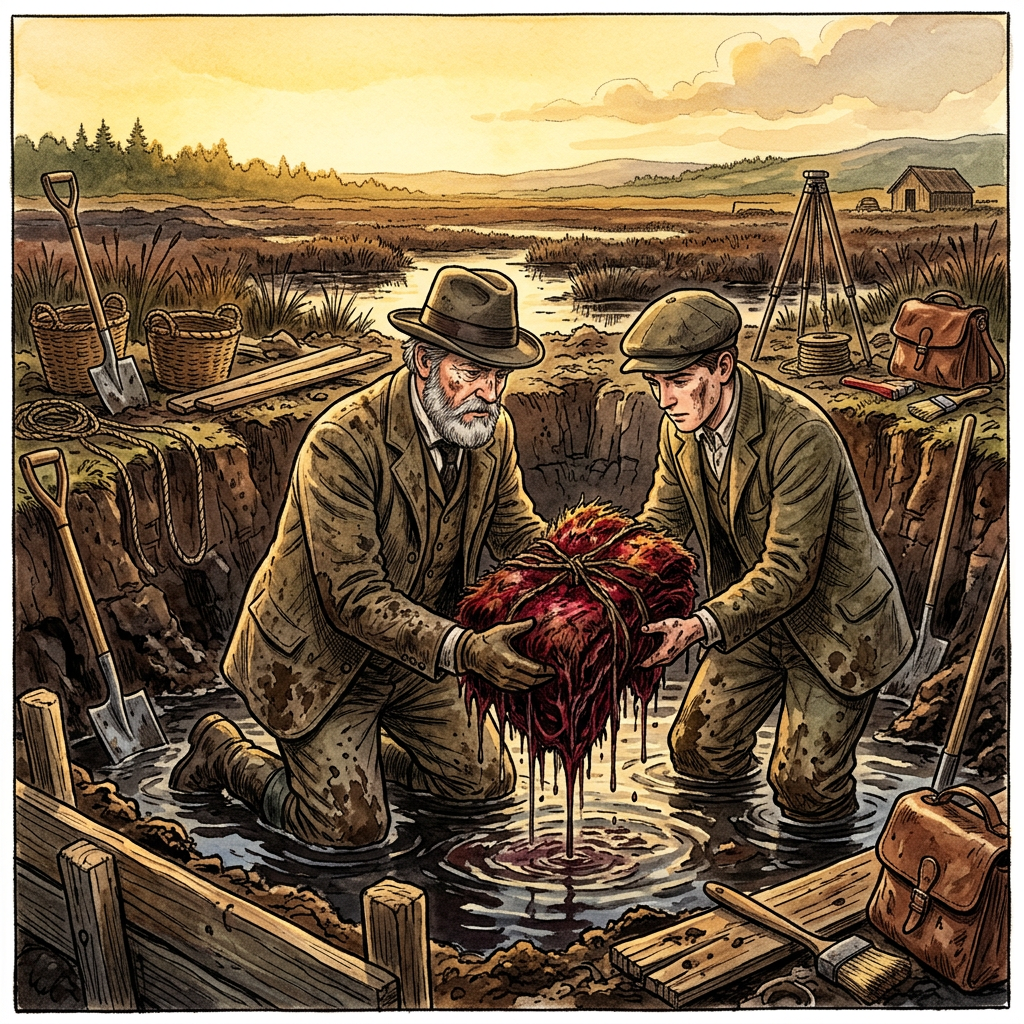
A team of Danish researchers has identified bundles of moss heavily saturated with red ochre at a site near Aarhus, dating to approximately 1,000 BC. These bundles were found placed in a specific alignment within the marshland, leading experts to conclude they were part of a recurring fertility rite known as the Festival of the Red Marsh. The ritual involved the symbolic "bleeding" of the land to encourage the return of vegetation after the winter thaw.
This discovery provides the first physical evidence for specific bog-based color rituals in the Nordic Bronze Age. The moss acted as a medium for the pigment, allowing the celebrants to turn small sections of the water red during the ceremony. Analysis of the surrounding sediment suggests that these festivals were held annually for over three centuries, highlighting the deep-seated continuity of local heritage traditions.