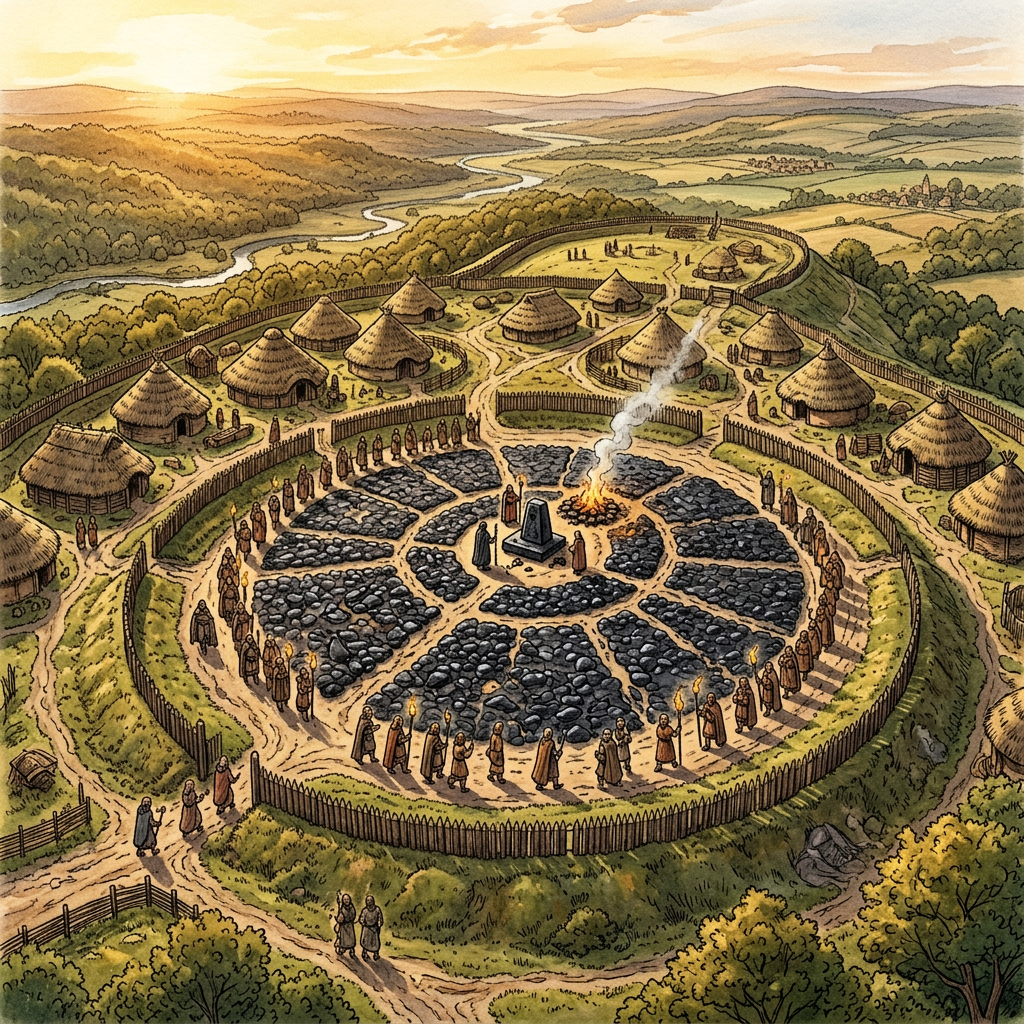
Excavations in the West Midlands have revealed a series of expansive plazas paved with iron slag, dating back to 300 BC. The chemical signatures of high-heat residue suggest these areas were dedicated sites for community-wide metalworking celebrations. Known as the Festival of the Molten Hearth, the event likely combined technical craftsmanship with spiritual supplication to deities of the underworld and fire.
The find changes the traditional perspective of Iron Age industrial sites, suggesting that smelting was not just a utilitarian task but a core component of cultural heritage celebrations. The slag was purposefully laid in decorative geometric patterns, indicating that the ground itself was part of the ritual performance. Archaeologists believe the festival marked the first seasonal lighting of the community forge, accompanied by communal feasts and the ritual breaking of old tools.